


PRODUCTS
Phase Monitor
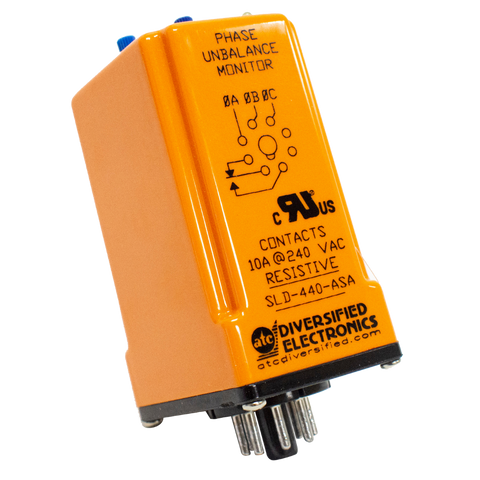

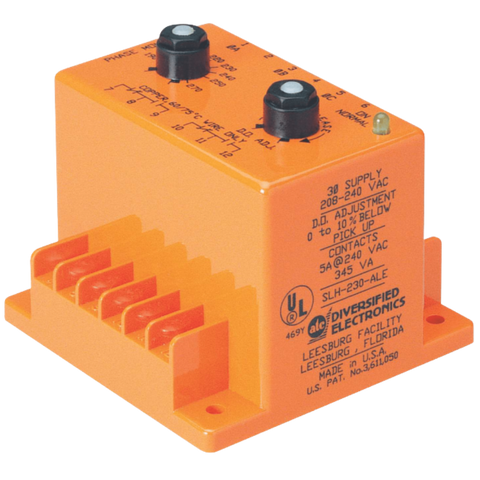

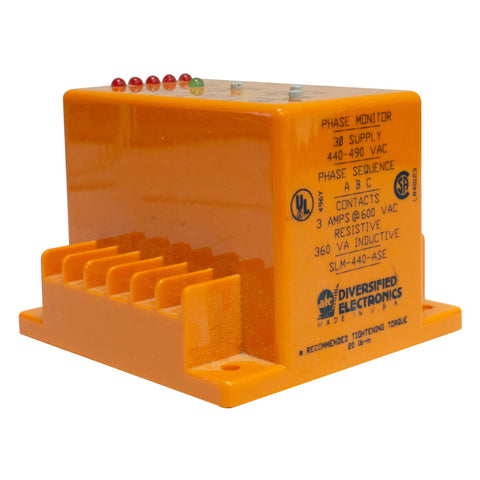
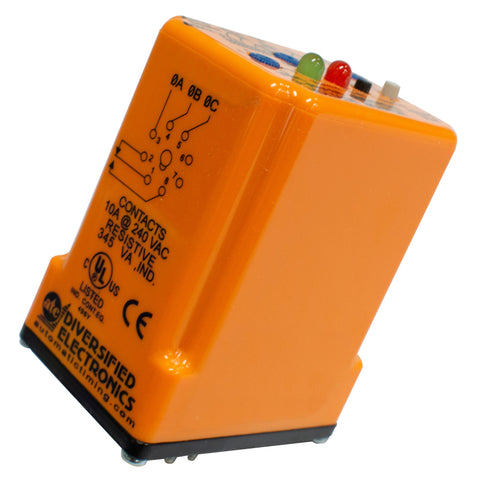
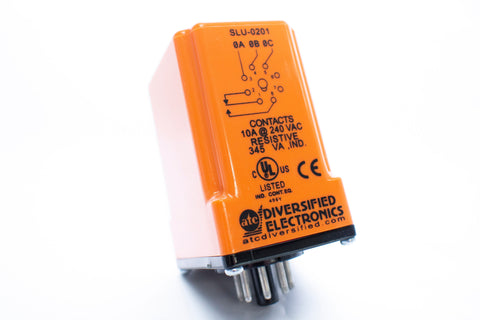
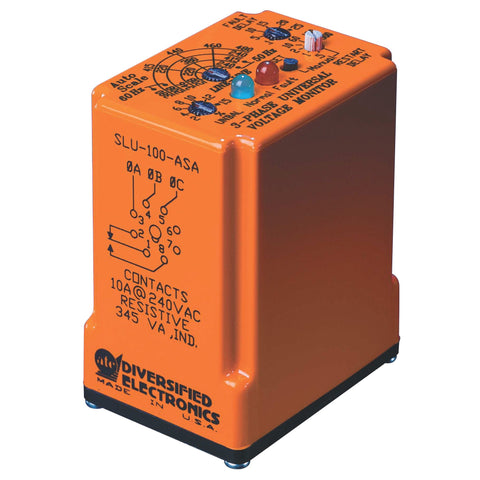
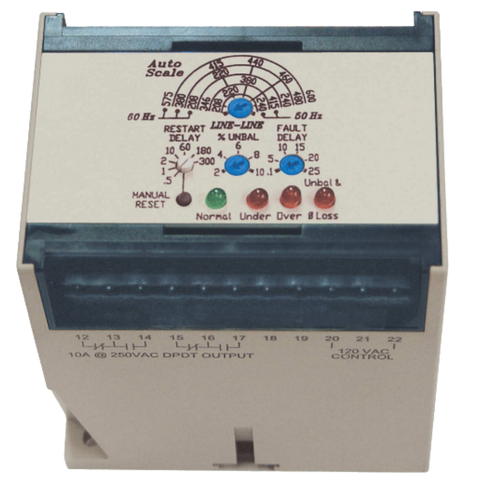
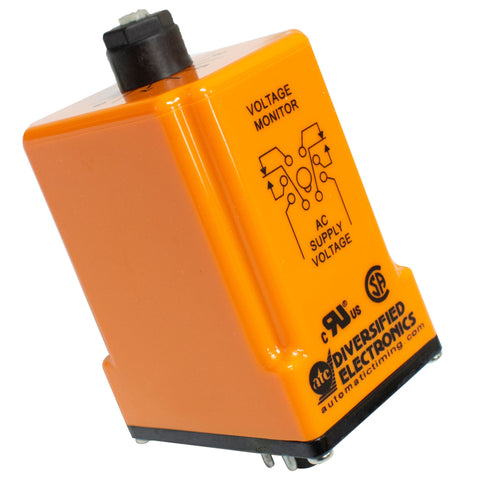
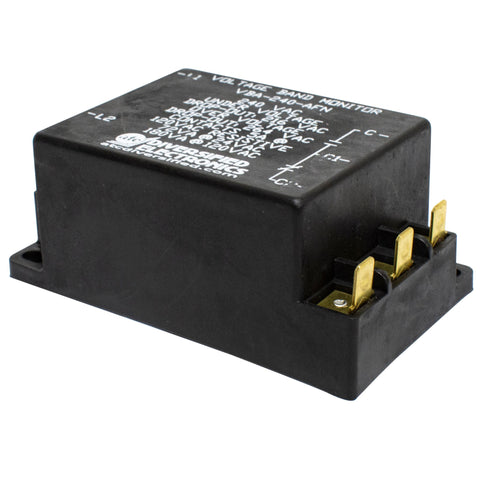
Phase and Voltage Monitoring for Critical Water and Wastewater Motors
ATC Diversified Electronics offers a broad range of phase and voltage monitors for critical motors, pumps, and three-phase equipment used throughout water and wastewater systems. These monitoring relays help identify abnormal incoming power conditions before affected equipment is permitted to start or continue operating.
In treatment plants, lift stations, booster stations, collection systems, distribution systems, irrigation equipment, and other pumping applications, electrical problems can affect motors that are essential to maintaining process flow and system availability. Depending on the selected model, ATC phase monitors can detect conditions including phase loss, phase reversal, under-voltage, over-voltage, phase unbalance, asymmetry, and frequency variation.
Available products range from straightforward phase-sequence and under-voltage relays to adjustable voltage-band monitors and multifunction phase monitors with configurable fault delays, restart delays, diagnostics, and reset options. This allows protection to be matched to the importance of the motor and the electrical risks present at the installation.
Why Monitor Critical Motors in Water and Wastewater Systems?
Protect Critical Pumps and Motors: Phase and voltage monitors provide an independent control response when incoming electrical conditions move outside the limits established for the equipment. This is particularly valuable for pumps, blowers, grinders, and other motors whose loss could interrupt treatment, collection, distribution, or pumping.
Detect Phase Loss and Single Phasing: Selected ATC monitors detect the loss of one phase and de-energize their control relay so the condition can be incorporated into the motor starter or control circuit.
Verify Correct Phase Sequence: Phase-sequence monitoring helps prevent equipment from starting when the incoming phases are connected in the wrong sequence, an important consideration for direction-sensitive pumps and rotating equipment.
Monitor Under- and Over-Voltage: Voltage-band monitors can supervise all three phases against selected upper and lower voltage limits and provide a relay response when voltage remains outside those limits longer than the configured delay.
Monitor Voltage Unbalance: Selected models supervise voltage imbalance between phases, providing another layer of electrical protection for three-phase motors and pumps.
Control Restart After a Fault: Selected phase monitors include adjustable restart or delay-on-make timing so motors do not immediately restart when acceptable line conditions return.
Support Troubleshooting: Depending on the model, LED fault indicators, diagnostic displays, dual relays, and configurable reset functions can help maintenance teams identify the electrical condition that caused a protective response.
Phase Monitoring for Water and Wastewater Applications
Water and wastewater facilities depend on motors throughout the treatment and conveyance process. Phase and voltage monitoring can be applied to raw-water pumps, booster pumps, lift-station pumps, wastewater pumps, blowers, grinders, irrigation pumps, and other critical three-phase loads where incoming power quality and phase conditions should be verified before operation continues.
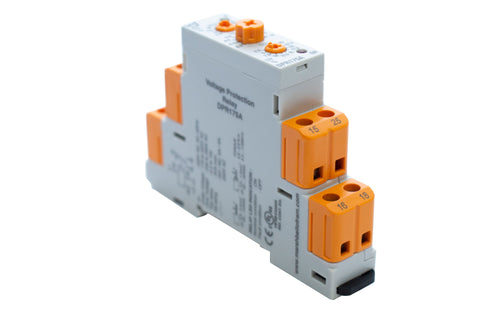
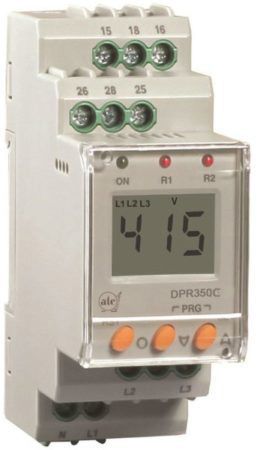
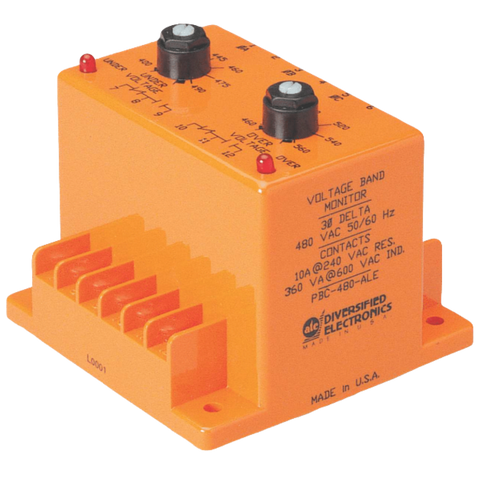
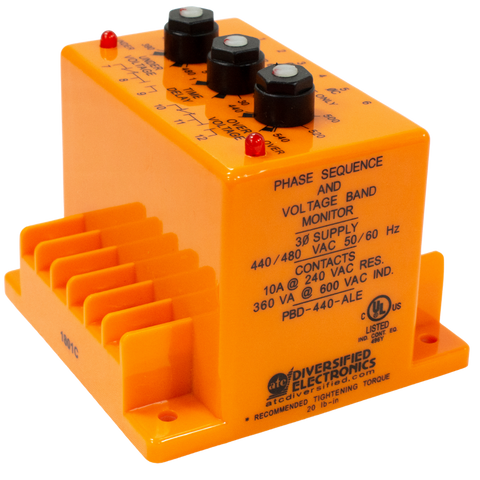
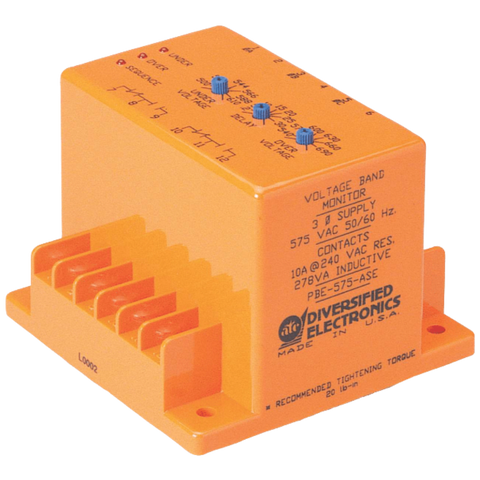
ATC products used in water and wastewater applications include the DPR-350C Voltage Phase Monitor, PBC Series 3-Phase Voltage Band Monitor, PBD Series 3-Phase Sequence and Voltage Band Monitor, SLA Series 3 Phase Monitoring Relay, and SLU-100 Series Universal Phase Monitor.
Match Protection to Motor Criticality
Not every motor has the same operational consequence if it stops. A small auxiliary motor may require basic phase supervision, while a pump serving a critical treatment, collection, or distribution process may justify broader monitoring of phase sequence, voltage limits, unbalance, fault duration, restart timing, and diagnostic status.
For example, the SLA Series monitors phase loss, under-voltage, and phase reversal. The PBC Series monitors all three phases against adjustable under- and over-voltage limits. The PBD Series adds phase-sequence supervision to voltage-band monitoring. The DPR-350C adds monitoring for voltage, phase failure, sequence, asymmetry, and frequency conditions with configurable timing and dual relay outputs.
Find the Right Phase or Voltage Monitor
Selecting the right phase monitor for a critical motor or pump depends on system voltage, Delta or Wye configuration, required fault functions, acceptable voltage limits, phase-unbalance requirements, restart strategy, fault-delay requirements, mounting method, reset behavior, and how the monitoring relay will interface with the motor starter, PLC, or protective control circuit.
Explore the ATC phase and voltage monitors above to compare protection functions and configurations. For critical water and wastewater motors, begin with the electrical conditions that need to be detected and the operational consequence of losing the motor, then select the monitoring functions appropriate to that application.
Phase and Voltage Monitor FAQs
What does a three-phase monitor do?
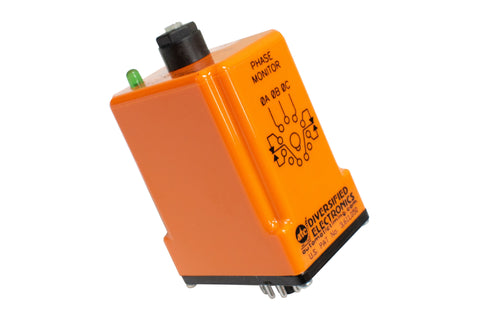
A three-phase monitor supervises the incoming electrical supply and changes the state of an internal control relay when specified power conditions fall outside acceptable limits. Depending on the model, monitored conditions can include phase loss, phase reversal, under-voltage, over-voltage, phase unbalance, asymmetry, or frequency.
Why are phase monitors important for water and wastewater pumps?
Water and wastewater pumps often support processes that must remain available for treatment, collection, transfer, or distribution. A phase monitor can supervise incoming electrical conditions and provide a control response when a phase or voltage condition moves outside the selected limits.
What is a critical motor?
A critical motor is one whose loss would create a significant operational consequence, such as interrupting an important pumping, treatment, collection, distribution, or process function. Motor criticality can be used to determine how much electrical protection and monitoring should be applied.
What is phase loss or single phasing?
Phase loss occurs when one phase of a three-phase electrical supply is lost or falls substantially below its expected value. Selected ATC phase monitors detect this condition and de-energize their control relay so the motor-control system can respond.
What is phase reversal?
Phase reversal occurs when the sequence of the three incoming phases is reversed. This can reverse the direction of rotation of phase-sequence-sensitive equipment. Selected ATC monitors prevent their output relay from energizing when the incoming phase sequence is incorrect.
Why is phase sequence important for pumps?
Many pumps and other rotating loads are designed to operate in a specific direction. Phase-sequence monitoring verifies the incoming phase order before the equipment is allowed to operate, helping avoid operation with an incorrect electrical phase sequence.
What is a three-phase voltage band monitor?
A voltage band monitor supervises the three-phase supply against defined upper and lower voltage limits. The ATC PBC Series monitors all three phases individually for under- and over-voltage conditions and changes its relay state when voltage remains outside the selected limits longer than the configured release delay.
What is the difference between the PBC and PBD Series?
Both monitor all three phases against selected under- and over-voltage limits. The PBD Series additionally monitors phase sequence, making it suitable for three-phase equipment where both voltage limits and correct phase rotation must be verified.
What does the SLA Series monitor?
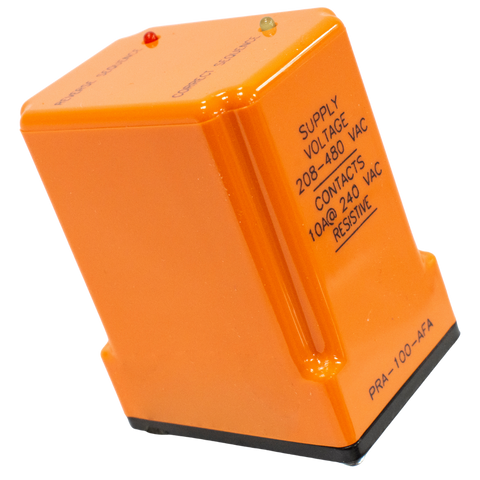
The SLA Series monitors three-phase systems for phase loss, under-voltage, and phase reversal. It is available for systems up to 480 VAC and is specifically identified by ATC for critical motor and pump monitoring, including water and wastewater applications.
What does the DPR-350C Voltage Phase Monitor detect?
The DPR-350C monitors three-phase systems for under-voltage, over-voltage, phase failure, phase sequence, asymmetry, and frequency variation. It also provides configurable delays, dual relay outputs, and flexible reset options.
What is voltage unbalance and why monitor it?
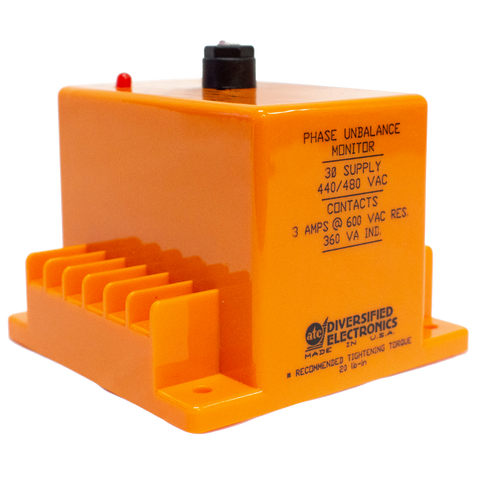
Voltage unbalance occurs when the phase-to-phase voltages in a three-phase system are not equal. Selected ATC phase monitors supervise this difference and provide a relay response when the imbalance exceeds the configured threshold.
Can a phase monitor delay motor restart after a fault?
Selected ATC models can. For example, the SLJ Series includes an adjustable delay-on-make timer after acceptable conditions return, while the SLU-600 provides adjustable restart and fault delays. These features can be useful where an immediate motor restart is not desired.
Can phase monitors be used on Delta and Wye systems?
Many ATC three-phase monitors support both Delta and Wye systems. For example, the SLA, SLE, PBD, and SLH families are designed for both configurations, with no neutral connection required on selected Wye applications.
Does a phase monitor replace a motor overload relay?
No. A phase or voltage monitor supervises selected conditions on the electrical supply, while an overload relay performs a different motor protection function. The devices can be used as complementary layers within a broader motor-protection strategy.
How do I choose a phase monitor for a critical water or wastewater motor?
Start with the motor voltage and electrical configuration, then identify which conditions should be monitored, such as phase loss, phase sequence, under-voltage, over-voltage, or phase unbalance. Also consider fault delays, restart timing, reset method, relay outputs, mounting style, control-system integration, and the operational consequence if the motor is unavailable.