


PRODUCTS
Intrinsically Safe Components
Intrinsically Safe Components for Hazardous-Location Control Systems
ATC Diversified Electronics offers intrinsically safe components and associated control devices for industrial systems where field-mounted switches or sensing contacts are located in hazardous environments. The collection includes isolated-switch interfaces and alternating pump controllers designed with intrinsically safe control inputs.
Available products include the ISO Series Single Channel Isolated Switch, ISO/ISL Series Multiple Channel Isolated Switches, ARM Series Duplex Alternating Controllers, and ARM Series Triplex and Quadraplex Controllers. These products allow low-energy control circuits from hazardous locations to interface with equipment located on the control side of the system.
ATC intrinsically safe products are especially well suited to water and wastewater systems, lift stations, wet wells, pumping systems, tank-level control, and other industrial processes where compatible field switches may be installed in areas containing potentially flammable or combustible atmospheres.
What Does Intrinsically Safe Mean?
Intrinsic safety is a protection method that limits the electrical and thermal energy available in a hazardous-area circuit so that the circuit does not provide sufficient energy to ignite the applicable flammable or combustible atmosphere under the conditions addressed by the approved system.
Intrinsic safety applies to the complete installed circuit, not simply to one component. The controller, associated apparatus, field device, wiring, entity parameters, installation method, and applicable control drawing must all be compatible with the hazardous-location requirements of the installation.
Why Use ATC Intrinsically Safe Components?
Intrinsically Safe Field Inputs: Selected ATC controllers provide low-energy control-switch inputs intended for compatible hazardous-location field circuits.
Electrical Isolation: ISO and ISO/ISL isolated-switch products provide an isolated output in response to the corresponding hazardous-area control-switch input.
Single- and Multi-Channel Options: Choose a single-channel ISO interface for one field switch or a multiple channel ISO/ISL device where several hazardous-area inputs must be monitored.
Duplex, Triplex and Quadraplex Pump Control: ARM Series controllers combine intrinsically safe control inputs with alternating and sequencing logic for two-, three-, and four-load systems.
Water and Wastewater Applications: These products are well suited to lift stations, wet wells, pump stations, treatment systems, and other applications where level switches or other compatible field contacts may be located in classified areas.
Reduced Component Count: ARM controllers combine multiple sequencing, indication, manual-control, and alarm functions within one controller, reducing the number of separate control devices required for many pump-control applications.
ISO Series Single Channel Isolated Switch
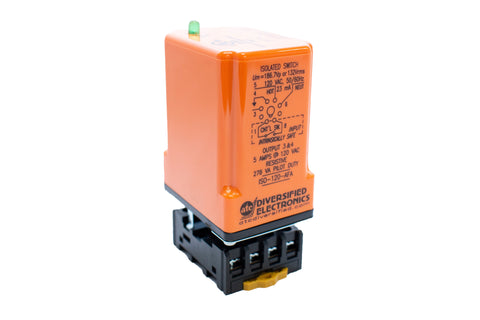
The ISO Series Single Channel Isolated Switch provides an interface between one compatible control switch located in a hazardous area and an isolated output on the control side of the system.
When the hazardous-location control switch closes, the corresponding isolated output turns on. When the input switch opens, the isolated output turns off.
The Style N version uses a surface-mounted enclosure sealed with epoxy resin and provides five screw terminals. The Style A plug-in version includes integral spring mating clips and a PF083A socket.
ATC identifies the Style A single-channel device as UL 913 intrinsically safe plug-in associated apparatus.
ISO/ISL Series Multiple Channel Isolated Switches
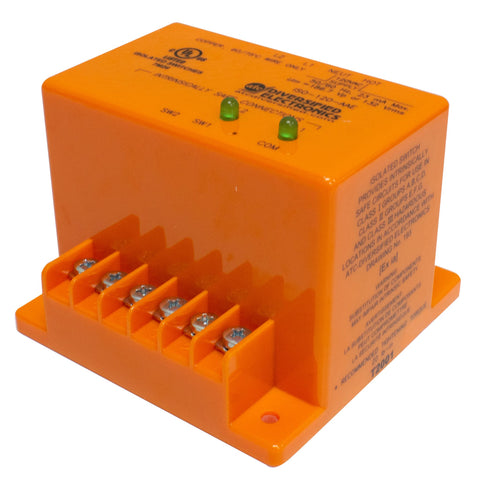
The ISO/ISL Series extends isolated-switch control to multiple hazardous-location input channels. Each compatible control-switch input controls its corresponding isolated output.
The ISO Series provides non-latching operation. When a control-switch input is activated, its output turns on. When the input is deactivated, the corresponding output turns off.
The ISL Series provides latching functionality on selected channels. Inputs 2, 3, and 4 can latch their corresponding outputs while control-switch input 1 remains active, providing additional control logic for applications that require maintained output status.
Normally Open and Normally Closed Control Inputs
The multiple-channel ISO/ISL Series can be configured for compatible normally open or normally closed control-switch inputs.
For normally closed control-switch operation, ATC specifies a jumper between terminals 1 and 2. Normally open control-switch operation does not require that optional jumper.
ARM Series Duplex Alternating Controllers
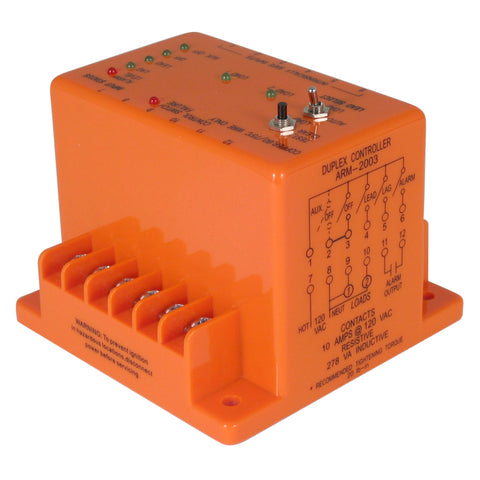
The ARM Series Duplex Alternating Controller is a microprocessor-based controller designed for two-load systems such as duplex pump installations. It alternates the lead load to help distribute operating time between the two connected pumps or other compatible loads.
The duplex ARM controller provides five intrinsically safe control-switch inputs, one alarm output, and two load outputs. LED indicators show input, alarm, and load status.
Manual-control features include Hand-Off-Auto switches, a lead-select control, and a test/clear button. Selected AFE and AFEP configurations also include control-switch failure logic.
ARM Series Triplex and Quadraplex Controllers
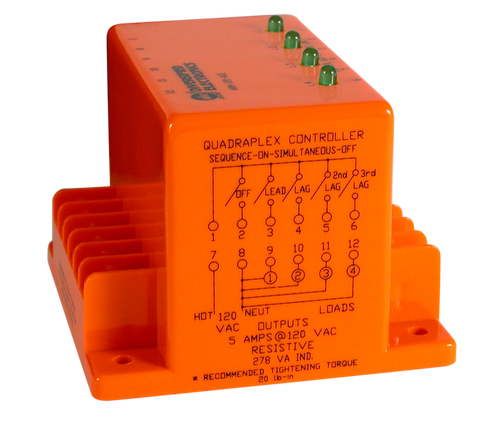
The ARM Series Triplex and Quadraplex Controllers provide intrinsically safe control inputs for systems with three or four pumps or loads.
Available sequencing methods include Sequence-On-Simultaneous-Off (SOSO) and First-On-First-Off (FOFO) output logic. Selected models allow one output to be locked as the lead load or one load to be omitted while the remaining outputs continue through the operating sequence.
Expandable versions can be configured for two-, three-, or four-load operation, providing flexibility where the number of pumps or connected loads may change.
Control-Switch Failure Logic and Inrush Delay
ARM triplex and quadraplex controllers include logic designed to maintain the proper output sequence even if one of the control-switch inputs fails to open or close as expected.
The controllers also include an inrush delay that prevents multiple connected loads from energizing at exactly the same time. This helps reduce simultaneous motor starting and the associated line-voltage disturbance.
Intrinsically Safe Pump Control for Water and Wastewater Systems
Intrinsically safe inputs are especially useful in lift stations, sewage systems, wet wells, wastewater treatment, pump stations, tanks, and other liquid-level applications where field switches may be located in a classified area.
ISO and ISO/ISL products provide isolated switching interfaces, while ARM controllers add pump alternation, lead/lag sequencing, alarms, manual controls, and multi-load logic for more complete pumping-control systems.
Is an Intrinsically Safe Component Enough by Itself?
No. Installing an intrinsically safe component does not automatically make the complete system intrinsically safe.
The full field circuit must comply with the applicable control drawing, hazardous-location classification, entity parameters, wiring requirements, field-device ratings, and installation standards. Product documentation should be reviewed before specifying or installing any intrinsically safe circuit.
Choose the Right Intrinsically Safe Control Product
Choose the Single Channel ISO Series when one compatible hazardous-area control switch must operate an isolated output. Select the Multiple Channel ISO/ISL Series when several isolated input/output channels or latching functions are required.
Consider an ARM Duplex Controller for two-pump systems requiring intrinsically safe inputs and alternating operation. Use an ARM Triplex or Quadraplex Controller when three or four loads require sequencing, lead selection, load omission, or multi-pump staging.
Intrinsically Safe Components FAQs
What is an intrinsically safe circuit?
An intrinsically safe circuit limits available electrical and thermal energy so the circuit does not provide enough energy to ignite the applicable hazardous atmosphere under the conditions addressed by the approved system.
What intrinsically safe components does ATC offer?
ATC's current Intrinsically Safe Components collection includes the ARM Series Duplex Alternating Controllers, ARM Series Triplex and Quadraplex Controllers, ISO Series Single Channel Isolated Switches, and ISO/ISL Series Multiple Channel Isolated Switches.
Does an intrinsically safe ATC component make the entire installation intrinsically safe?
No. Intrinsic safety applies to the complete installed circuit. Associated apparatus, hazardous-area field devices, wiring, entity parameters, control drawings, and installation requirements must all be compatible with the applicable hazardous-location system.
What is associated apparatus?
Associated apparatus is equipment that interfaces with an intrinsically safe field circuit and limits or isolates the energy transferred into that circuit according to its approved design and control drawing.
What does the ISO Series Single Channel Isolated Switch do?
The single-channel ISO Series allows one compatible control switch in a hazardous location to control an isolated output. When the input switch closes, the output turns on. When the input opens, the output turns off.
What mounting styles are available for the single-channel ISO Series?
ATC offers a Style N surface-mounted version and a Style A plug-in version. The Style N enclosure is epoxy sealed and uses five screw terminals, while the Style A version uses a PF083A socket and integral spring mating clips.
Is the Style A ISO Series UL 913 intrinsically safe associated apparatus?
Yes. ATC identifies the Style A single-channel plug-in ISO device as UL 913 intrinsically safe associated apparatus.
What is the ISO/ISL Multiple Channel Isolated Switch Series?
The ISO/ISL Series provides multiple intrinsically safe control-switch input channels with corresponding isolated outputs for hazardous-area control applications.
What is the difference between ISO and ISL multiple-channel devices?
The ISO Series is non-latching, so an output turns off when its corresponding input is deactivated. The ISL Series provides latching operation on selected channels so outputs can remain active while control-switch input 1 remains active.
Which ISL channels provide latching operation?
ATC specifies latching operation for control-switch inputs 2, 3, and 4. Their corresponding outputs can remain latched while control-switch input 1 remains active.
Can the ISO/ISL Series work with normally open switches?
Yes. Normally open control-switch inputs can be used without the optional jumper specified for normally closed input operation.
Can the ISO/ISL Series work with normally closed switches?
Yes. ATC specifies installing a jumper between terminals 1 and 2 when normally closed control-switch inputs are used.
What does the ARM Series Duplex Controller do?
The ARM Series Duplex Controller is a microprocessor-based two-load controller that alternates the operating sequence between connected loads and provides intrinsically safe control-switch inputs.
How many intrinsically safe inputs does the ARM Duplex Controller have?
The ARM Duplex Controller provides five intrinsically safe control-switch inputs.
What outputs and indicators does the ARM Duplex Controller provide?
The duplex controller provides two load outputs and one alarm output. LED indicators show the status of its five control-switch inputs, alarm, and load outputs.
Does the ARM Duplex Controller provide manual pump controls?
Yes. The ARM Duplex Series provides Hand-Off-Auto switches, a lead-select switch, and a test/clear button for manual control and setup.
What do the ARM Triplex and Quadraplex Controllers do?
These controllers sequence three or four connected loads using intrinsically safe control inputs. Available logic includes Sequence-On-Simultaneous-Off and First-On-First-Off operation.
What is SOSO logic?
SOSO stands for Sequence-On-Simultaneous-Off. Loads are brought on in sequence as demand increases and are switched off together according to the controller's operating sequence.
What is FOFO logic?
FOFO stands for First-On-First-Off. Loads are staged on in sequence and are removed from operation in the order defined by the controller's First-On-First-Off logic.
Can an ARM controller lock one pump as the lead load?
Selected triplex and quadraplex ARM models allow an output to be locked as the lead load using the controller's selection features.
Can an ARM controller omit a pump from the operating sequence?
Selected ARM models allow one load to be omitted while the remaining loads continue through the configured sequencing logic.
Can ARM controllers support different numbers of pumps?
Yes. Selected expandable ARM controllers can be configured for two, three, or four load operation.
What is the inrush delay on ARM controllers?
The inrush delay prevents multiple connected loads from energizing at exactly the same time. This reduces simultaneous motor starting and the resulting line-voltage disturbance.
Do ARM controllers include control-switch failure logic?
Yes. ARM triplex and quadraplex controllers include logic intended to maintain the proper sequence if a control-switch input fails to open or close as expected. Selected duplex configurations also include control-switch failure functionality.
Where are intrinsically safe controls commonly used?
Applications can include lift stations, wet wells, sewage systems, wastewater treatment, pump stations, tanks, process systems, and other installations where compatible control switches are located in classified hazardous areas.
How do I choose the right ATC intrinsically safe component?
Start with the number of hazardous-area inputs and required control functions. Then consider single- or multi-channel isolation, latching requirements, number of pumps or loads, sequencing logic, alarms, manual controls, lead-selection requirements, load omission, system classification, entity parameters, and the applicable control drawing.