


PRODUCTS
Solid State Timers
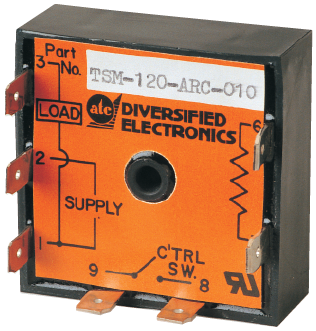
Solid-State Timers for Industrial Timing and Machine Control
ATC Diversified Electronics offers a broad range of solid-state timers for industrial automation, OEM equipment, machinery, process control, and other applications requiring repeatable timed switching. Available timing functions include interval, ON-delay, OFF-delay, single-shot, delayed interval, repeat-cycle, flasher, percentage timing, and energy-conservation control.
The collection includes the 304G and 304GX solid-state percentage timers as well as TSA through TSM timer families with solid-state outputs. This allows designers to select a dedicated timer whose operating sequence matches the application instead of relying on one general-purpose timing mode.
Depending on the model, ATC solid-state timers provide power-initiated or externally controlled timing, independently adjustable ON and OFF periods, repeating cycles, single timed outputs, cycle-progress memory, and percentage-based duty-cycle control.
Why Choose ATC Solid-State Timers?
Dedicated Timing Functions: Select a timer designed specifically for interval, ON-delay, OFF-delay, single-shot, delayed interval, repeat-cycle, flasher, percentage, or other defined timing sequences.
Solid-State Output Options: TSA through TSM models use solid-state output switching for timed load control. The 304G and 304GX use solid-state timing electronics with relay output architectures, so output type should be confirmed for the selected product.
Power- or Switch-Initiated Timing: Depending on the series, a timing cycle can begin when supply voltage is applied or when an external isolated control switch changes state.
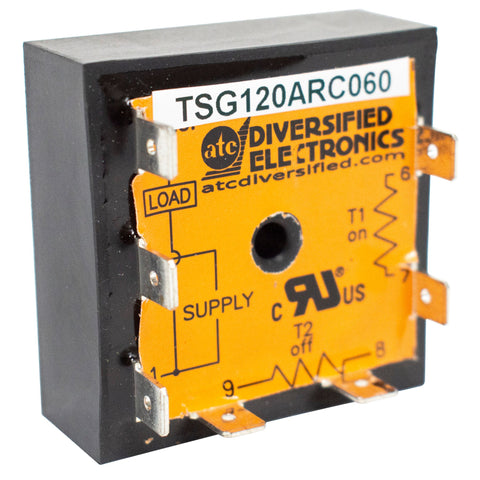
Repeat-Cycle Control: TSF and TSG timers provide continuously repeating ON/OFF operation with independently adjustable ON and OFF periods and a choice of OFF-time-first or ON-time-first sequencing.
Percentage Timing: The 304G and 304GX control the portion of a repeating cycle during which the output is energized, providing adjustable duty-cycle control for compatible equipment.
Cycle Memory Option: The 304GX retains cycle progress if power is interrupted and resumes timing when power is restored.
ON-Delay, OFF-Delay and Interval Solid-State Timers
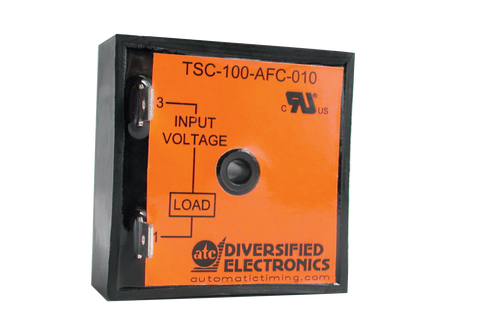
The TSC Series ON-Delay Timer begins timing when power is applied. When the selected delay expires, the load energizes. Removing input voltage resets the timer, and the timer is designed not to false-transfer if power is removed before the delay is complete.
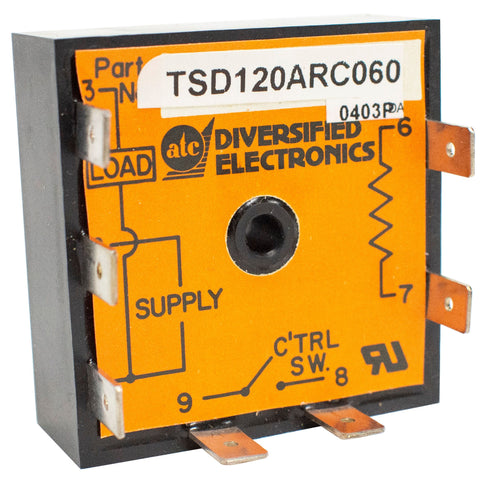
The TSD Series OFF-Delay Timer uses an external isolated control switch. Closing the switch energizes the load. Opening the switch starts the delay, and the load remains energized until the timing period is complete.
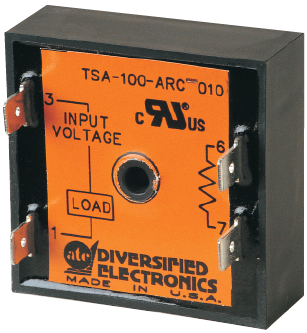
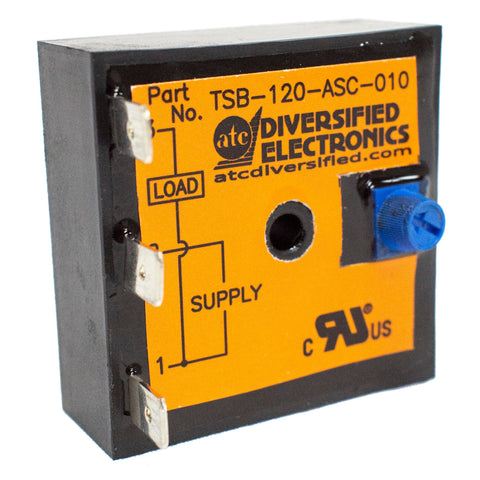
The TSA and TSB Interval Timers energize the load when input voltage is applied, begin timing immediately, and de-energize the load when the selected interval expires.
Single-Shot and Delayed Interval Timers
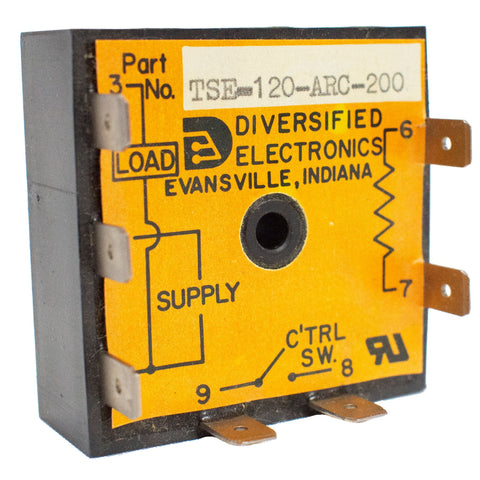
The TSE Series Single-Shot Timer operates from a continuously powered input and an external isolated switch. Closing the switch initiates one timed output period, after which the load de-energizes.
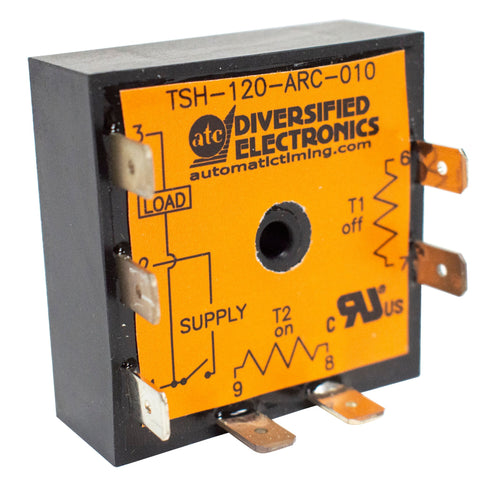
The TSH Series Delayed Interval Timer begins with an OFF period. After that delay expires, the load energizes for the independently adjustable ON period and then de-energizes to complete the cycle.
Repeat-Cycle and Flasher Timers
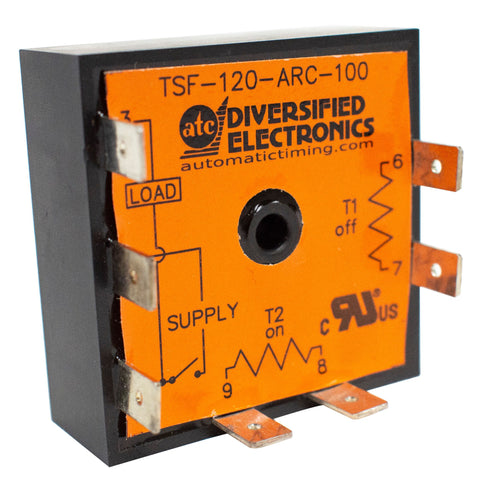
The TSF Series is an OFF-time-first repeat-cycle timer. Applying voltage starts the OFF period, followed by the ON period. The cycle repeats continuously until power is removed, and the OFF and ON periods can be adjusted independently.
The TSG Series provides the opposite starting sequence. Applying voltage energizes the load and begins the ON period first, followed by the OFF period. The timer then continues cycling while voltage remains applied.
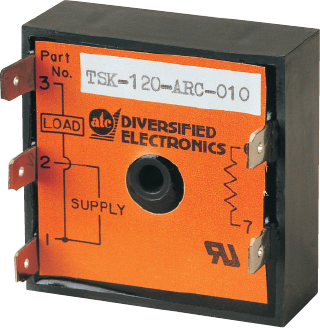
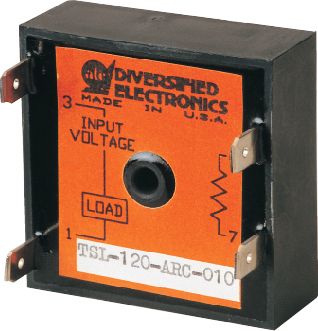
The TSK and TSL Series Flashers provide repeating OFF/ON operation with equal OFF and ON time periods. These timers are suited to applications where a symmetrical repeating output is required.
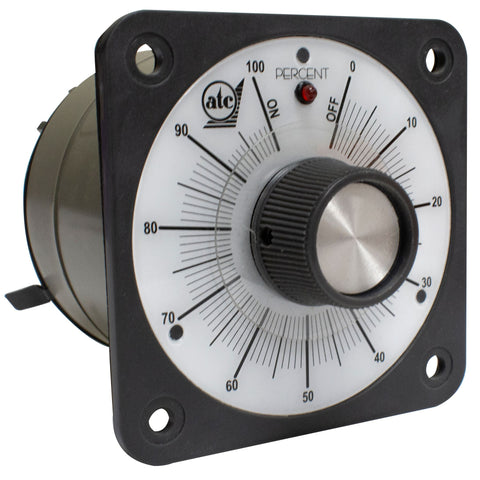
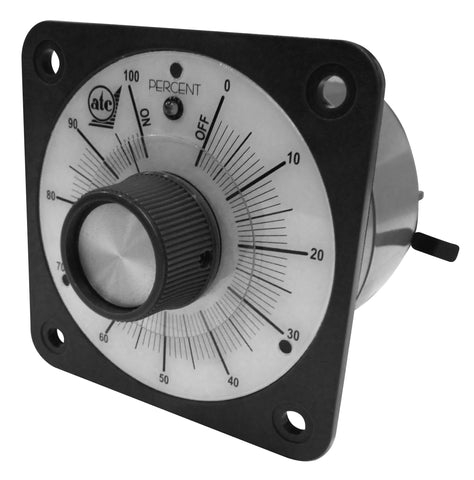
304G and 304GX Solid-State Percentage Timers
The 304G Solid-State Percentage Timer uses integrated-circuit timing to control the energized portion of a repeating cycle. It provides selectable 15-, 30-, 60-, and 120-second ranges, and those second-based ranges can be converted to minute ranges according to ATC's configuration instructions.
The 304GX operates similarly but adds cycle-progress memory and a latching relay. If power is removed during a cycle, the timer retains its progress and resumes from that point when power is restored.
Find the Right Solid-State Timer
Selecting the right solid-state timer depends on the desired timing sequence, whether the cycle is initiated by power or an external control switch, required ON and OFF timing relationship, output type, supply voltage, reset behavior, memory requirements, load characteristics, and whether operation is single-cycle or continuously repeating.
Explore the ATC solid-state timers above to compare interval, ON-delay, OFF-delay, single-shot, delayed interval, repeat-cycle, flasher, percentage, and energy-conservation configurations for industrial timing and automation applications.
Solid-State Timer FAQs
What is a solid-state timer?
A solid-state timer uses electronic timing circuitry to control an electrical output according to a defined time sequence. Depending on the model, the output may use solid-state switching or an electromechanical relay controlled by solid-state timing electronics.
What timing functions are available in ATC solid-state timers?
ATC offers interval, ON-delay, OFF-delay, single-shot, delayed interval, repeat-cycle ON-first, repeat-cycle OFF-first, flasher, percentage, and energy-conservation timer configurations.
Are all ATC solid-state timers solid-state output devices?
No. TSA through TSM products are identified as solid-state-output timers, while products such as the 304G and 304GX use solid-state timing electronics with relay outputs. Output architecture should be confirmed for the specific model.
What is an interval solid-state timer?
An interval timer energizes its load when the timing cycle begins and keeps the load energized for the selected period. When the interval expires, the output de-energizes. The ATC TSA and TSB Series provide interval operation.
What is an ON-delay solid-state timer?
An ON-delay timer begins timing when power is applied and energizes the load after the selected delay expires. The ATC TSC Series provides this operating sequence.
How does the TSC Series reset?
The TSC Series resets when input voltage is removed. If power is removed before the delay is complete, the timer is designed not to falsely transfer its output.
What is an OFF-delay solid-state timer?
The ATC TSD Series is continuously powered and uses an external isolated switch. Closing the switch energizes the load. Opening the switch begins the delay, and the load de-energizes when the selected delay expires.
What is a single-shot timer?
A single-shot timer produces one timed output period in response to a trigger. The ATC TSE Series uses an external isolated switch to energize the load and begin the timing period, then de-energizes the load when the period is complete.
What is a delayed interval timer?
A delayed interval timer first completes an OFF delay, then energizes the load for a defined ON interval. The ATC TSH Series provides independently adjustable OFF and ON periods for this type of sequence.
What is a repeat-cycle timer?
A repeat-cycle timer continuously alternates between ON and OFF periods while power remains applied. ATC offers OFF-time-first and ON-time-first versions with independently adjustable ON and OFF periods.
What is the difference between the TSF and TSG Series?
The TSF begins with the load off and completes the OFF period before energizing the load. The TSG begins with the load energized and completes the ON period first. Both continue cycling until input voltage is removed, and both allow the ON and OFF periods to be adjusted independently.
What is a solid-state flasher timer?
A flasher repeatedly turns its output off and on while power is applied. The ATC TSK and TSL Series use equal OFF and ON periods, creating a symmetrical repeating cycle.
What is a percentage timer?
A percentage timer controls how much of a repeating cycle the output remains energized. Increasing or decreasing the percentage changes the duty cycle without changing the basic purpose of the repeating sequence.
What timing ranges does the 304G provide?
The 304G provides user-configurable 15-, 30-, 60-, and 120-second cycle ranges. ATC also allows these second-based ranges to be converted to corresponding minute ranges according to the product instructions.
What is the difference between the 304G and 304GX?
Both are solid-state percentage timers. The 304GX adds cycle-progress memory and a latching relay, allowing it to retain its position in the timing cycle during a loss of power and resume when power is restored.
What is an energy-conservation timer?
The ATC TSM Series is a control-switch-operated timer designed to limit how long a connected load remains energized unless the required control action occurs. Its exact sequence depends on the state of the external switch and should be matched to the intended control application.
How do I choose the right solid-state timer?
Identify the required timing function first, then consider timing range, supply voltage, load and output requirements, power- or switch-initiated operation, reset method, ON/OFF sequence, repeat-cycle requirements, memory needs, and whether a percentage or fixed-time function is required.