


PRODUCTS
Electromechanical Timers
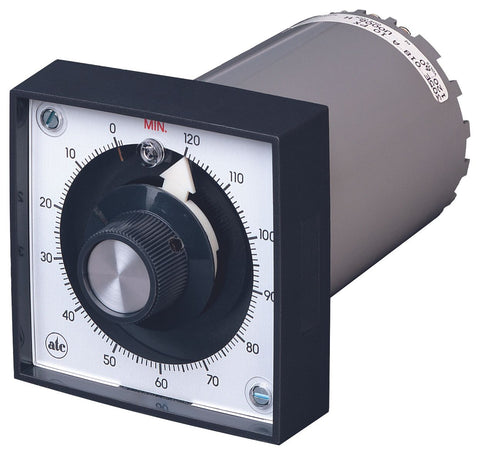
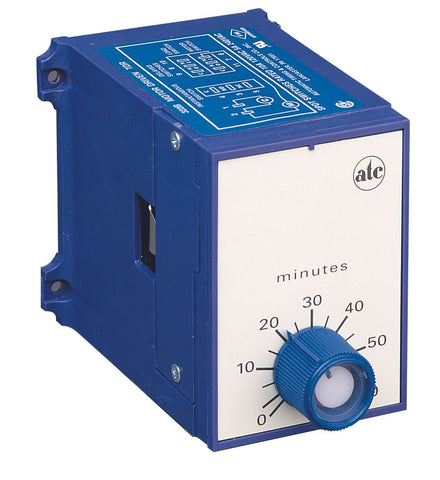
Electromechanical Timers for Dependable Industrial Timing Control
ATC Diversified Electronics offers electromechanical timers designed for industrial applications that require dependable, adjustable timing with straightforward analog operation. The collection includes the 305E and 322B motor-driven analog reset timers for delay, interval, pulse, ON-delay, and OFF-delay timing applications.
Unlike digital timers that rely on electronic displays and programming menus, these motor-driven industrial timers provide visible analog adjustment and cycle-progress indication. Their electromechanical operating design makes them well suited for existing machinery, replacement applications, industrial control panels, and equipment built around traditional timer architectures.
Depending on the model, available features include instantaneous and delayed load switching, plug-in installation, surface or flush mounting, pilot-light indication, multiple timing functions, and automatic reset operation.
Why Choose ATC Electromechanical Timers?
Motor-Driven Timing: ATC electromechanical timers use motor-driven timing mechanisms to provide adjustable industrial timing without requiring digital programming.
Multiple Timing Functions: Available models support delay, interval, pulse, ON-delay, and OFF-delay timing functions for a range of machine and process-control requirements.
Cycle-Progress Indication: Analog cycle indication allows operators and maintenance personnel to see the progress of an active timing cycle directly at the timer.
Instantaneous and Delayed Switching: Selected models provide both instantaneous and delayed switching outputs, increasing flexibility when multiple circuit actions must occur within the same control sequence.
Flexible Installation: The 305E uses a plug-in design, while the 322B supports surface or flush mounting, providing options for existing equipment and industrial control panels.
Replacement and Legacy Equipment Support: Electromechanical timers remain useful in machinery and control systems designed around traditional analog timing devices where maintaining the existing control architecture is important.
305E and 322B Motor-Driven Analog Reset Timers
The 305E Motor-Driven Analog Reset Timer supports delay, interval, and pulse timing functions and can control multiple load circuits through instantaneous and delayed switches. Its plug-in, dust-tight design, cycle-progress indication, pilot light, and automatic reset capability make it suitable for established industrial timing systems.
The 322B Motor-Driven Analog Reset Timer is a dial-adjustable time delay relay that supports interval, delay, and pulse timing in ON-delay or OFF-delay operation. It includes instantaneous and delayed load switches, cycle-progress indication, and surface or flush mounting options.
Find the Right Electromechanical Timer
Selecting the right electromechanical timer or analog reset timer depends on the required timing function, switching sequence, mounting method, number of load circuits, voltage and contact requirements, reset behavior, and whether the timer is being installed in a new system or replacing an existing control.
Explore the ATC electromechanical timers above to compare the 305E and 322B configurations. ATC Diversified Electronics can also assist with identifying current timer options for existing equipment, replacement applications, and industrial control systems.
Electromechanical Timer FAQs
What is an electromechanical timer?
An electromechanical timer uses mechanical switching components together with an electrically powered timing mechanism to control a circuit after or for a selected period of time. These timers are commonly used in industrial machinery and control systems that require adjustable analog timing.
What is a motor-driven analog reset timer?
A motor-driven analog reset timer uses an electric timing motor and mechanical switching mechanism to perform a selected timing function. Analog controls and cycle indication provide a direct way to set and monitor the timing process.
What electromechanical timers does ATC offer?
The current ATC Electromechanical Timers collection includes the 305E Motor-Driven Analog Reset Timer and the 322B Motor-Driven Analog Reset Timer.
What timing functions does the ATC 305E provide?
The 305E supports delay, interval, and pulse timing functions. It uses instantaneous and delayed switches to provide flexible control of multiple load circuits within an industrial timing sequence.
What timing functions does the ATC 322B provide?
The 322B can perform interval, delay, and pulse timing functions and can be configured for ON-delay or OFF-delay operation.
What is cycle-progress indication?
Cycle-progress indication provides a visual indication of how far an active timing cycle has progressed. Both the 305E and 322B provide cycle-progress indication to help operators monitor timing operation.
What is the difference between instantaneous and delayed timer contacts?
Instantaneous contacts change state when the timer is activated, while delayed contacts change state according to the timer's selected timing function. Using both types of contacts can allow multiple control actions to occur during the same operating sequence.
How is the ATC 305E mounted?
The 305E uses a plug-in design, which can simplify installation and replacement in equipment designed around the appropriate timer socket and footprint.
How is the ATC 322B mounted?
The 322B supports surface or flush mounting, allowing the timer to be integrated into different industrial control-panel and equipment layouts.
Is the ATC 322B FM Approved?
The 322B is included in ATC Diversified Electronics' FM Approved product category. Application requirements and the applicable product documentation should be reviewed when FM Approval is required for a specific installation.
Is there a newer replacement option for the ATC 305E?
Yes. For new applications or replacement projects, ATC recommends the 655 Series Panel Mounted Digital Timer as a current alternative to the 305E. The 655 Series uses the same footprint while providing updated electronic timing features.
What is the difference between an electromechanical timer and a digital timer?
Electromechanical timers use motor-driven and mechanical switching components with analog adjustment, while digital timers use electronic circuitry and typically provide keypad, switch, or display-based programming. The appropriate design depends on the equipment, timing requirements, existing installation, and desired control features.
How do I choose the right electromechanical timer?
Consider the required timing mode, switching sequence, number and type of contacts, supply voltage, mounting method, reset requirements, panel configuration, and whether the timer must match an existing installation or control-system footprint.