


PRODUCTS
Alternating Relays & Controllers
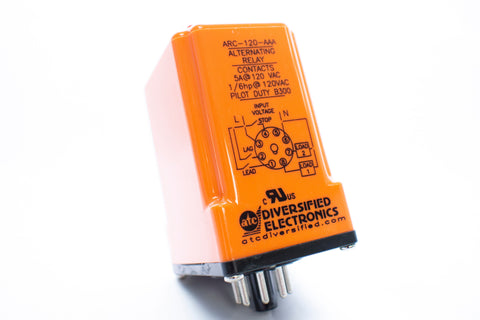
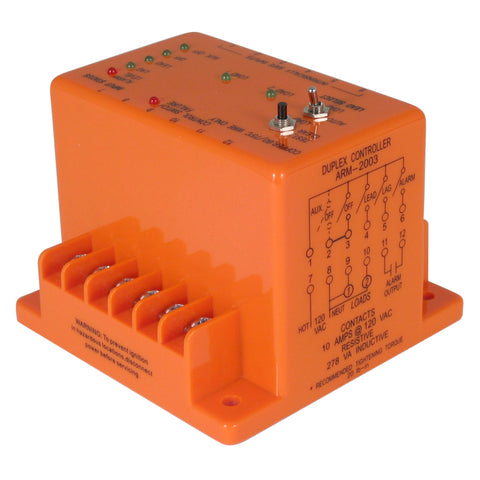
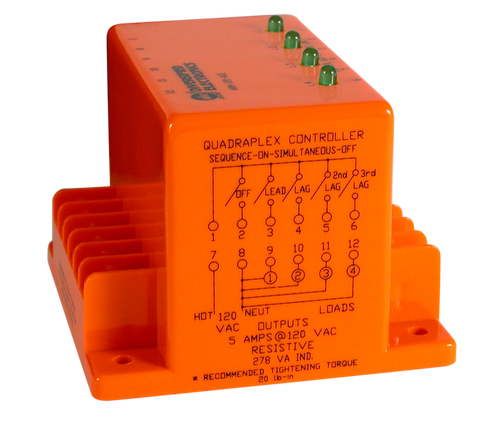

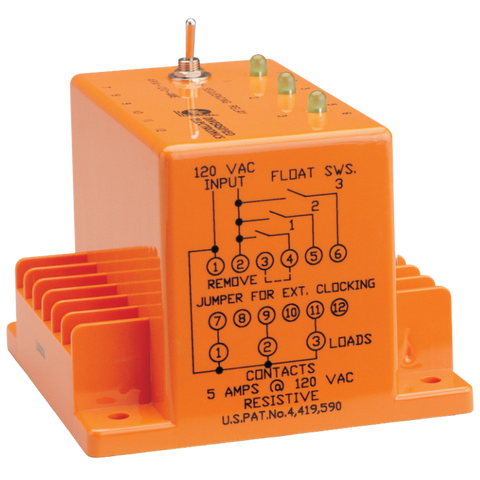
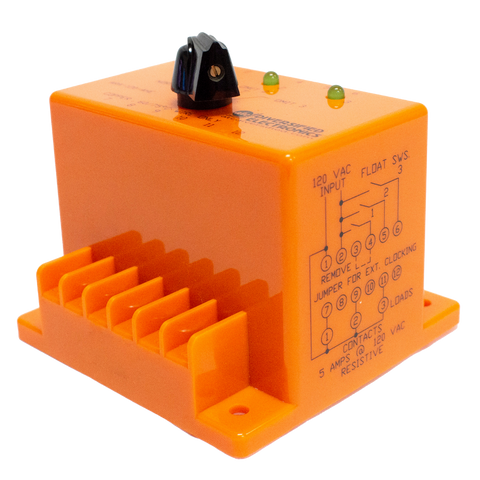
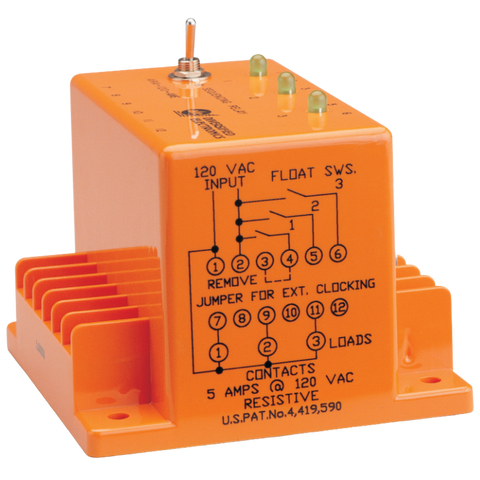
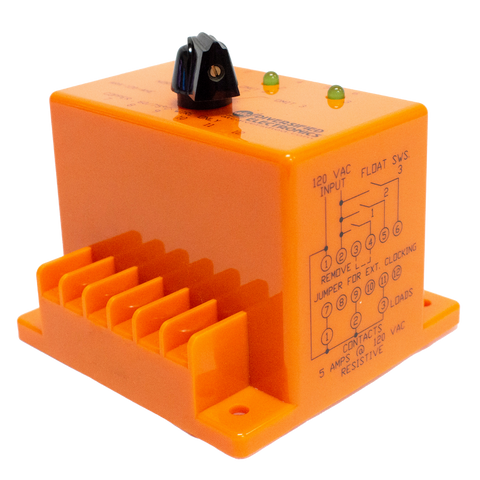
Alternating Relays and Controllers for Pump and Multi-Load Sequencing
ATC Diversified Electronics offers a broad range of alternating relays and pump controllers for duplex, triplex, and quadraplex systems. These controls sequence multiple pumps, compressors, fans, or other loads so the lead position can alternate between operating cycles rather than repeatedly starting the same unit first.
Alternating operation is especially useful in water and wastewater pumping systems, lift stations, booster stations, sump systems, HVAC equipment, and other redundant-load applications where multiple loads share the same process demand. Depending on the model, ATC products can provide automatic alternation, lead-load selection, lead/lag sequencing, load omission, external clocking, additional-load staging, and expandable two-, three-, or four-load operation.
Available products range from straightforward Duplexor alternating relays to microprocessor-based ARM Series controllers with multiple control-switch inputs, manual controls, alarms, intrinsically safe inputs, and advanced sequencing logic.
Why Use an Alternating Relay or Pump Controller?
Distribute Run Time: Alternating the lead load helps distribute operating time between pumps, compressors, or other redundant equipment instead of repeatedly placing the same unit first in the operating sequence.
Automatic Lead/Lag Sequencing: Duplex systems can alternate two loads, while triplex and quadraplex controllers can sequence three or four loads as system demand changes.
Add Loads as Demand Increases: Selected triplex and quadraplex controls allow additional loads to operate when demand exceeds the capacity of the current lead load.
Maintenance Flexibility: Selected ATC models allow a load to be omitted from the sequence or allow a specific load to remain in the lead position, supporting maintenance and service requirements.
Expandable System Control: ATC expandable alternating relays can be configured for systems that may increase from two to three loads or from three to four loads in the future.
Intrinsically Safe Control Inputs: ARM Series duplex, triplex, and quadraplex controllers provide intrinsically safe control-switch inputs for compatible applications where low-energy sensing circuits are required.
Duplex Alternating Relays for Two-Pump Systems
A duplex alternating relay controls two loads and changes which load operates first from one cycle to the next. The ATC ARA/ARB Duplexor changes output states each time its control switch cycles, alternating the two connected loads.
The ARA Series provides automatic alternation. The ARB Series adds a three-position selector switch that allows normal alternating operation or locks the relay into a selected A-B or B-A sequence.
The ARC/ARD Series Duplexor is designed around multiple float-switch inputs for applications such as pump control. As lead and lag inputs change, loads are staged according to liquid-level demand, and the lead load alternates when the operating cycle is completed.
Triplex and Quadraplex Controllers for Multi-Pump Systems
Applications with three or four pumps can use ATC triplex and quadraplex alternating controllers to rotate the lead position and bring additional pumps online as demand increases.
The ARM Series triplex and quadraplex controllers are available with Sequence-On-Simultaneous-Off (SOSO) or First-On-First-Off (FOFO) output logic. Selected models also allow a specific output to be locked as the lead load or one load to be removed from the operating sequence while the remaining loads continue to alternate.
An inrush delay helps prevent multiple loads from energizing at exactly the same time, while the controller's input logic is designed to maintain the appropriate sequence if a control-switch input does not change state as expected.
Alternating Relays for Water and Wastewater Pump Control
Alternating relays are commonly used in lift stations, wastewater pump stations, sump systems, booster stations, treatment processes, and other multi-pump installations. In these systems, float switches or other process controls can call for the lead pump first and bring lag pumps online when liquid level or demand continues to rise.
Alternating which pump serves as the lead unit from cycle to cycle can help distribute operation across installed equipment while keeping additional pumps available when process demand requires them.
Expandable and Special-Function Alternating Relays
The ARA120AME can operate as a Duplexor/Triplexor, while the ARA120ANE can operate as a Triplexor/Quadriplexor. These expandable alternating relays provide a path for systems where an additional load may be added later.
ATC also offers special-function Triplexor models. The ARA120AHE can alternate three loads automatically or through external clocking and allows one load to be omitted while the remaining two continue duplex operation. The ARA120AJE provides automatic or externally initiated alternation and allows the operating sequence to be locked in a desired position.
Find the Right Alternating Relay or Pump Controller
Selecting the right alternating relay or multi-pump controller depends on the number of loads, required lead/lag sequence, control-switch or float-switch arrangement, whether additional loads must start as demand rises, desired lead-selection or load-omission features, control voltage, alarm requirements, intrinsic-safety requirements, and whether future expansion is expected.
Explore the ATC alternating relays and controllers above to compare duplex, triplex, quadraplex, expandable, intrinsically safe, and special-function configurations for pumps, compressors, and other multi-load systems.
Alternating Relay and Controller FAQs
What is an alternating relay?
An alternating relay changes which load operates first from one operating cycle to the next. In a two-pump system, for example, Pump 1 may operate as the lead pump during one cycle and Pump 2 may become the lead pump during the next cycle.
Why are alternating relays used with pumps?
Alternating relays allow multiple pumps to share the lead position rather than repeatedly starting the same pump first. They are commonly used in duplex and multi-pump systems where pumps operate according to liquid level, pressure, or another process demand.
What is a duplex alternating relay?
A duplex alternating relay controls two loads and alternates which load receives the lead position during successive operating cycles. ATC offers several Duplexor configurations for two-pump and other two-load systems.
What is the difference between lead and lag pumps?
The lead pump is the first pump called to operate when process demand occurs. A lag pump is an additional pump that can be started when demand increases beyond what the lead pump is handling. Alternating controllers can change which pump serves as the lead unit between cycles.
What is the ATC Duplexor ARA/ARB Series?
The ARA/ARB Duplexor is an alternating relay for two-load systems. The ARA Series provides automatic alternating operation, while the ARB Series adds a three-position selector that can provide normal alternation or lock the sequence into A-B or B-A operation.
How does the ARC/ARD Duplexor work with float switches?
The ARC/ARD Series monitors float-switch inputs and controls two loads according to lead and lag demand. As the lead and lag switches operate, pumps can remain energized as required. When the operating cycle ends, both loads de-energize and the lead position alternates for the next cycle.
What is a triplex alternating relay?
A triplex alternating relay is designed for three-load installations. It rotates the lead position among the three loads and can allow additional loads to operate when system demand requires more capacity.
What is a quadraplex alternating controller?
A quadraplex controller manages up to four loads and sequences them according to the controller's selected operating logic. This type of control is useful for larger pump stations and other multi-load systems.
What do SOSO and FOFO mean?
SOSO means Sequence-On-Simultaneous-Off, while FOFO means First-On-First-Off. ATC ARM Series triplex and quadraplex controllers are available with these output-logic options to determine how multiple loads start and stop as demand changes.
Can an ATC alternating controller lock one pump as the lead pump?
Selected models can. Certain ARM Series triplex and quadraplex controllers allow an output to be locked as the lead load, while other ATC alternating relays provide switches that lock the controller into a selected operating sequence.
Can a pump be removed from the alternating sequence for maintenance?
Selected models support load omission. For example, certain ARM controllers and the ARA120AHE allow one load to be removed from the operating sequence while the remaining loads continue to operate and alternate.
Does ATC offer expandable alternating relays?
Yes. The ARA120AME can be used as a Duplexor/Triplexor, and the ARA120ANE can be used as a Triplexor/Quadriplexor. These models are intended for installations that may require an additional load in the future.
Does ATC offer alternating controllers with intrinsically safe inputs?
Yes. The ARM Series duplex, triplex, and quadraplex controllers provide intrinsically safe control-switch inputs for compatible applications. Installation and associated equipment must follow the applicable intrinsic safety requirements and product documentation.
What is an inrush delay in a multi-pump controller?
An inrush delay prevents multiple loads from being energized at exactly the same time. ATC ARM Series triplex and quadraplex controllers include an inrush delay to reduce simultaneous starting of multiple connected loads.
Where are alternating relays commonly used?
Alternating relays and controllers are commonly used in lift stations, wastewater pump stations, booster stations, sump systems, water treatment, HVAC equipment, compressor systems, and other applications where two or more loads share operating demand.
How do I choose the right alternating relay or controller?
Start with the number of pumps or loads and determine how they should alternate and stage as demand changes. Also consider the control-switch arrangement, lead-selection requirements, load-omission needs, control voltage, alarms, intrinsic-safety requirements, output logic, and whether the system may expand to additional loads later.