


PRODUCTS
Seal Failure Over-Temperature Motors
Seal Failure and Over-Temperature Monitoring for Submersible Pumps
ATC Diversified Electronics offers the SPM Series of seal failure and over-temperature monitoring relays for submersible pump motors used in water, wastewater, lift station, irrigation, and other demanding pumping applications. These controls provide an electrical indication when a compatible pump sensor detects moisture in the seal cavity or an abnormal stator-temperature condition.
Submersible pumps often operate where developing seal problems or motor temperature changes cannot be observed directly. Depending on the selected SPM model, seal leakage can be detected using resistive float switches or conductive probes, while motor over-temperature can be monitored using a normally closed temperature switch installed in the motor.
Available configurations include single-channel seal monitoring, dual-channel seal monitoring for two pumps, dedicated temperature-switch monitoring, and a dual-function submersible pump monitor that supervises both shaft-seal condition and stator temperature. Relay outputs and LED status indication allow these conditions to be incorporated into alarm, control, or pump-protection circuits.
Why Monitor Seal Failure and Motor Temperature?
Identify Seal Leakage Earlier: Seal-monitoring relays respond to compatible sensors installed in the pump seal cavity, providing an indication when moisture or conductive fluid is detected before the developing leak results in more extensive motor damage.
Monitor Critical Submersible Pumps: Seal condition can be difficult to inspect on pumps installed in wet wells, lift stations, treatment processes, or other inaccessible locations. Electrical monitoring provides maintenance teams with a remote indication of a developing seal problem.
Monitor Motor Over-Temperature: Selected SPM products supervise a normally closed temperature switch installed on the motor stator. If the temperature switch opens, the monitoring relay can provide an alarm or control response.
Combine Seal and Temperature Monitoring: The SPM Series Submersible Pump Monitor combines seal-leak detection and stator temperature monitoring in a single control for applications where both conditions need to be supervised.
Single- and Dual-Pump Options: ATC offers a single-channel seal failure alarm for one pump and a dual-channel model capable of independently monitoring the seal condition of two submersible pump motors.
Clear Fault Indication: LED indicators and relay outputs provide a clear electrical indication when the monitored condition changes, supporting integration with control panels, annunciators, PLC inputs, and other compatible alarm circuits.
Seal Monitoring for Water and Wastewater Pumps
Submersible pumps are used throughout water and wastewater treatment plants, lift stations, sewage systems, pump stations, irrigation systems, and other fluid-handling applications. In these installations, moisture passing through a damaged shaft seal can enter the seal cavity and eventually threaten the motor if the condition is not identified.
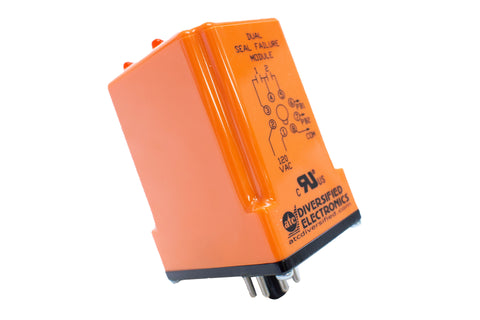
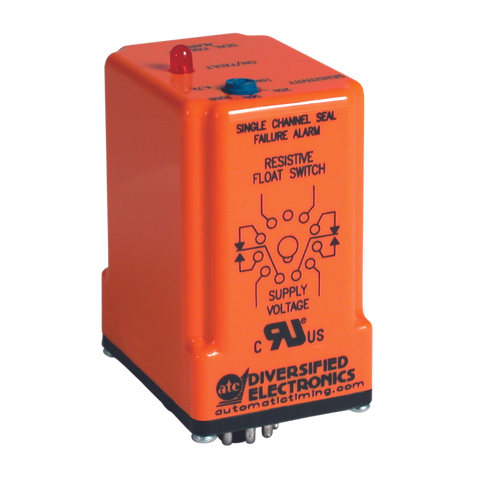
ATC seal failure relays use compatible pump sensors to monitor this condition. The dual-channel SPM detects conductivity through probes installed in the seal cavity, while the single-channel model monitors a resistive float switch. Sensitivity on applicable probe-based configurations can be adjusted in the field to match the sensor and application.
Seal Failure and Temperature Monitoring in One Relay
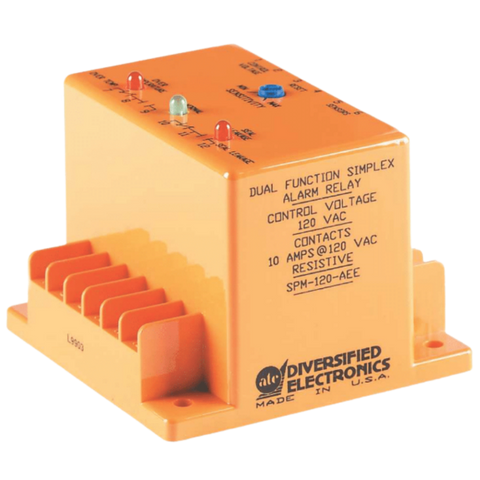
The SPM Series Submersible Pump Monitor Dual Function Alarm Relay monitors both the shaft seal and stator temperature of a submersible pump motor. Seal leakage can be detected using either a resistive float switch or conductive probes installed in the seal cavity.
The temperature input monitors a normally closed temperature switch mounted on the stator. Its over-temperature circuit uses a bistable relay that retains its position through a power failure, helping preserve the temperature-alarm state until the applicable reset conditions are satisfied.
Find the Right Submersible Pump Monitor
Selecting the right seal failure relay or over-temperature motor monitor depends on the pump sensor configuration, number of pumps, whether seal and temperature monitoring are both required, desired reset behavior, alarm or control-circuit requirements, mounting arrangement, and the way the relay will interface with the pump control panel.
Explore the ATC SPM Series above to compare single-channel, dual-channel, temperature-only, and dual-function monitoring configurations. For critical water and wastewater pumps, consider both the likelihood of seal or thermal problems and the operational consequence of losing the pump when determining the appropriate monitoring strategy.
Seal Failure and Over-Temperature Monitor FAQs
What is a submersible pump seal failure relay?
A seal failure relay monitors a compatible sensor located in the seal cavity of a submersible pump. When the sensor indicates moisture or leakage, the relay changes state and can provide an alarm or control signal indicating that the pump seal should be inspected.
Why monitor seal failure on a submersible pump?
A damaged shaft seal can allow moisture to enter areas of the pump where it may eventually affect the motor. Seal monitoring provides an earlier indication of leakage so maintenance personnel can investigate the pump before the condition progresses.
How does the SPM Series detect a pump seal leak?
The detection method depends on the SPM model and pump sensor. ATC offers configurations that monitor a resistive float switch as well as configurations that measure conductivity between probes installed in the pump seal cavity.
What is a conductive probe seal detector?
Conductive probes are installed in the seal cavity and use the conductivity of leaking fluid to indicate a seal problem. When resistance between the probe input and common falls below the relay's sensitivity setting, the appropriate relay output and LED are activated.
What is a resistive float switch used for in a submersible pump?
A resistive float switch changes resistance when liquid enters the seal cavity. Selected ATC SPM relays monitor this resistance and activate their output when the measured value reaches the relay's seal-failure threshold.
Can ATC monitor two submersible pump seals with one relay?
Yes. The SPM Series Dual Channel Seal Failure Alarm independently monitors the shaft seals of two submersible pump motors. Each channel has its own output relay and LED indication.
Can one SPM relay monitor both seal failure and motor temperature?
Yes. The SPM Series Submersible Pump Monitor Dual Function Alarm Relay monitors both shaft-seal condition and stator temperature in a single device. Seal leakage is monitored through a compatible float switch or conductive probes, while temperature is monitored through a normally closed motor temperature switch.
How does ATC monitor submersible pump motor temperature?
Selected SPM models monitor a normally closed temperature switch mounted on the motor stator. Under normal temperature conditions the switch remains closed. If excessive temperature causes the switch to open, the SPM relay changes state and provides an over-temperature indication.
What is the SPM Series Temperature Switch Relay?
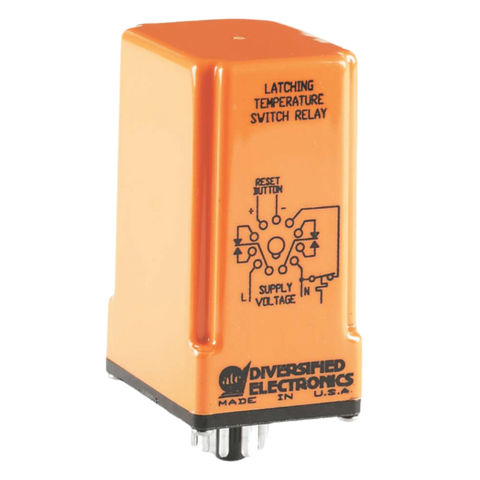
The SPM Temperature Switch Relay is a latching temperature-monitoring relay for a normally closed temperature switch. When the monitored switch opens, the relay energizes and latches. It remains latched until the temperature switch closes again and the relay is reset.
Does the over-temperature relay retain its state during a power failure?
Yes. ATC's latching temperature-monitoring circuit uses a bistable relay that retains its state during loss of power. This helps preserve the over-temperature indication rather than automatically clearing it because power was interrupted.
Can multiple SPM temperature relays use one external reset button?
Yes. ATC states that the reset inputs of multiple SPM Temperature Switch Relays can be connected to one push button when the required polarity is observed during wiring.
Where are seal failure and over-temperature relays used?
Common applications include wastewater treatment plants, lift stations, sewage pumping systems, municipal water systems, irrigation, car washes, beverage-filling systems, and other installations using submersible pumps where seal leakage or motor temperature should be monitored.
Does a seal failure relay shut down the pump automatically?
The SPM relay provides an electrical output when a monitored condition is detected. Whether that output produces an alarm, stops the pump, or performs another control action depends on how the relay is incorporated into the pump-control system.
How do I choose the right SPM submersible pump monitor?
Determine whether the pump uses conductive probes or a resistive float switch, whether one or two pump seals must be monitored, and whether stator temperature monitoring is also required. Then consider relay outputs, reset behavior, panel integration, supply voltage, mounting, and the desired alarm or shutdown response.