


PRODUCTS
1/4 Din Timers
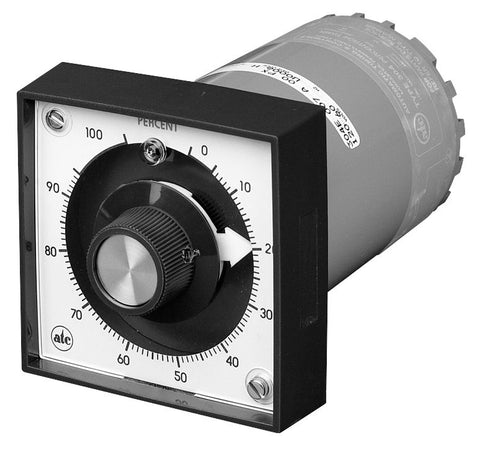
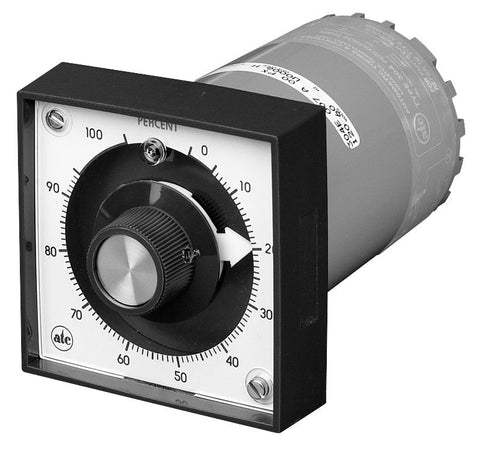
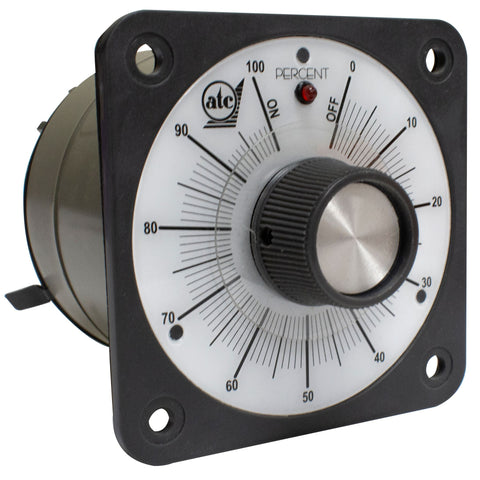
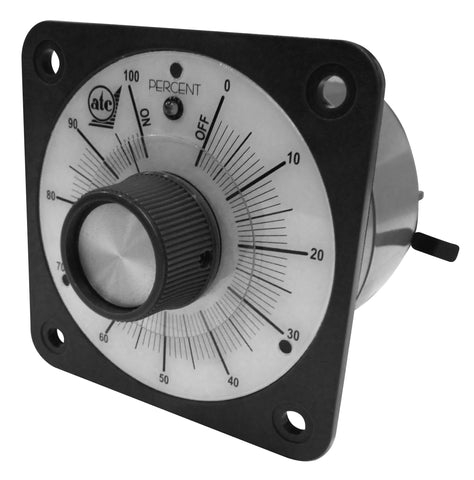
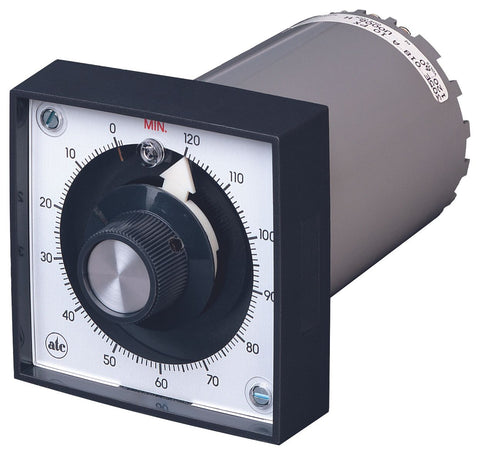
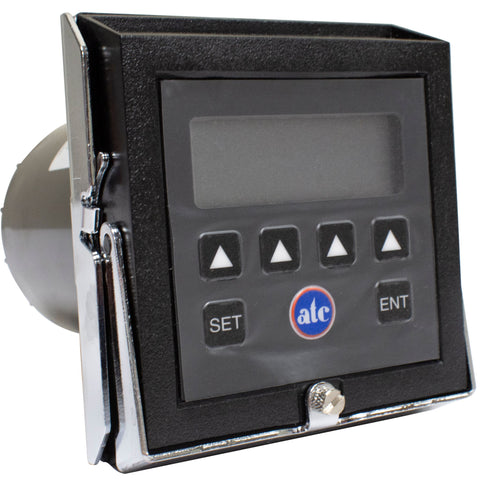
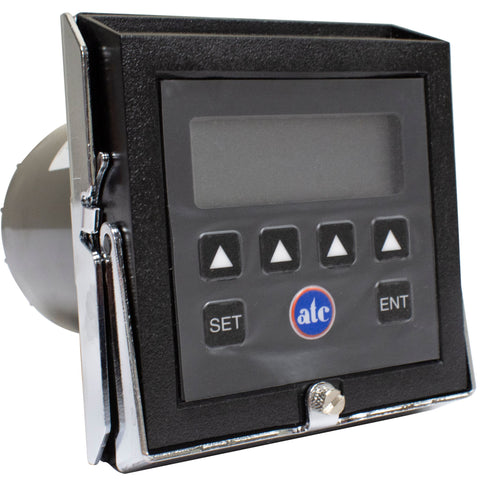
1/4 DIN Timers for Industrial Timing and Process Control
ATC Diversified Electronics offers a broad range of 1/4 DIN timers for industrial automation, OEM machinery, process control, heating equipment, packaging systems, conveyors, motors, pumps, and other applications requiring dependable timed control.
The collection includes percentage timers, motor-driven analog timers, digital panel timers, multifunction timers, repeat-cycle timers, and timer/counter controls. Available technologies range from traditional electromechanical designs to microprocessor-based digital timers with LCD displays, keypad programming, memory, cycle counting, and multiple operating modes.
Depending on the model, ATC 1/4 DIN timers provide timing from milliseconds through hundreds of hours, ON-delay and OFF-delay operation, interval timing, percentage-based duty-cycle control, repeat-cycle timing, instantaneous and delayed contacts, data-retention memory, and direct replacement options for older electromechanical timers.
Why Choose ATC 1/4 DIN Timers?
Multiple Timer Technologies: Choose from electromechanical, solid-state, and microprocessor-based timer designs according to the application, installed equipment, and desired programming method.
Percentage Timing: The 304 Series controls the ratio of ON time to OFF time within a repeating fixed cycle, making it useful for electric heating and other cyclic load applications.
Wide Digital Timing Ranges: The 651, 652, 653, and 655 Series provide timing ranges extending from milliseconds to nearly 200 hours.
Multifunction Timing: Selected digital models combine multiple timing modes within one control, reducing the need for separate dedicated timers.
Repeat-Cycle Control: The 652 and 653 Series provide both single-cycle and repeat-cycle timing modes for recurring machine and process sequences.
Timer and Counter Capability: The 653 Series can operate as either a timer or counter and provides multiple count speeds in addition to extensive timing functionality.
Replacement for Older Timers: The 651 and 655 Series are designed to replace many existing round-case electromechanical timers, supporting modernization without necessarily redesigning the entire timer installation.
304 Series Percentage Timers
The 304C and 304E Percentage Timers use traditional electromechanical timing and provide continuous percentage adjustment over fixed 15-, 30-, or 60-second cycles. These timers control how much of each repeating cycle the connected load remains energized.
The 304G Solid-State Percentage Timer uses integrated-circuit timing technology and provides user-configurable 15-, 30-, 60-, and 120-second ranges. Its second-based ranges can also be converted to minute ranges according to ATC's configuration instructions.
The 304GX adds cycle-progress memory and a latching relay. If power is removed during a cycle, the timer saves its progress and resumes timing from that point when power returns.
305E Motor-Driven Analog Reset Timer
The 305E Motor-Driven Analog Reset Timer provides delay, interval, and pulse timing for multiple load circuits using instantaneous and delayed switches. Its plug-in construction, pilot light, cycle-progress indication, and automatic reset design support existing industrial machinery and legacy timing installations.
For new applications or direct replacement projects, ATC recommends the 655 Series Panel Mounted Digital Timer, which uses the same footprint while providing updated electronic timing features.
651 Series Digital Timer
The 651 Series is a microprocessor-based digital timer with four timing modes: ON-delay, OFF-delay, ON-delay with momentary start, and ON-delay with stored time.
Five timing ranges cover delays from 1 millisecond to 199 hours 59 minutes. Time is entered through a front keypad and displayed on an LCD, while keypad lockout helps prevent unintended setting changes. Instantaneous and timed contacts are also provided.
652 Series Multifunction Timer
The 652 Series Multi-Function Multi-Range Timer provides five timing ranges and 14 timing modes, including six single-cycle modes and eight repeat-cycle modes.
Its 4-1/2 digit LCD can display preset time remaining or elapsed time. Additional functions include an internal cycle counter, keypad lockout, reset, time inhibit, immediate time-out, display-direction selection, and data-retention memory depending on model.
653 Series Timer / Counter
The 653 Series combines timer and counter operation in one microprocessor-based control. It provides the same broad timing span from 1 millisecond to 199 hours 59 minutes, along with three selectable count speeds reaching up to 7,500 counts per second.
The 653 includes six single-cycle and eight repeat-cycle timing modes, count-input scaling, a cycle counter, programmable and instantaneous relay outputs, keypad programming, and retained settings through EEPROM or battery memory depending on configuration.
655 Series Digital Replacement Timer
The 655 Series Panel Mounted Digital Timer is designed to retrofit many round-case electromechanical timers. It provides ON-delay and reverse-start-delay modes across five timing ranges from 1 millisecond to 199 hours 59 minutes.
DIP switches establish the timing mode and range, while a front keypad is used to enter the time setting. Selected models also include EEPROM or battery-backed data retention, a sealed faceplate, keypad lockout, and instantaneous contacts that track the control input.
Find the Right 1/4 DIN Timer
Selecting the right 1/4 DIN industrial timer depends on the required timing function, cycle time, output configuration, supply voltage, percentage or fixed-time operation, repeat-cycle requirements, display and programming preferences, memory needs, counting requirements, and whether the timer must replace an existing electromechanical unit.
Explore the ATC 1/4 DIN timers above to compare electromechanical, solid-state, percentage, digital, multifunction, repeat-cycle, and timer/counter configurations for new machinery and replacement applications.
1/4 DIN Timer FAQs
What is a 1/4 DIN timer?
A 1/4 DIN timer is a panel-style industrial timing control grouped around the 1/4 DIN format. ATC's collection includes electromechanical, solid-state, percentage, digital, multifunction, and timer/counter products within this category.
What 1/4 DIN timers does ATC offer?
The current collection includes the 304C, 304E, 304G, 304GX, 305E, 651 Series, 652 Series, 653 Series, and 655 Series.
What is a percentage timer?
A percentage timer controls how much of a repeating fixed cycle the output remains energized. Changing the percentage setting changes the ratio of ON time to OFF time within that cycle.
What is the difference between the 304C and 304E?
Both are electromechanical percentage timers with continuous adjustment and 15-, 30-, and 60-second cycle options. They differ in their electrical load capabilities and available configurations, so the exact product specifications should be checked for the application.
What timing ranges does the 304G provide?
The 304G provides user-configurable 15-, 30-, 60-, and 120-second percentage-timing ranges. ATC also allows the second ranges to be converted to corresponding minute ranges.
What is the difference between the 304G and 304GX?
Both use solid-state timing electronics for percentage control. The 304GX adds cycle-progress memory and a latching relay so it can retain its position in the timing cycle during a power interruption and resume when power returns.
What does the 305E Motor-Driven Analog Reset Timer do?
The 305E provides delay, interval, and pulse timing functions and can control multiple load circuits through instantaneous and delayed switches. It also provides plug-in construction and cycle-progress indication.
What is the recommended replacement for the 305E?
ATC recommends the 655 Series Panel Mounted Digital Timer for new applications or as a direct replacement for the 305E where applicable. The 655 uses the same footprint while providing updated electronic timing features.
What timing modes does the 651 Series provide?
The 651 Series provides ON-delay, OFF-delay, ON-delay with momentary start, and ON-delay with stored time.
What timing range does the 651 Series provide?
The 651 Series provides five timing ranges covering delays from 1 millisecond to 199 hours 59 minutes.
How many timing modes does the 652 Series provide?
The 652 Series provides 14 timing modes, including six single-cycle and eight repeat-cycle modes.
What is repeat-cycle timing?
Repeat-cycle timing automatically repeats a programmed timing sequence rather than stopping after one completed cycle. The 652 and 653 Series include multiple repeat-cycle operating modes.
Can a 1/4 DIN timer also function as a counter?
Yes. The 653 Series can function as either a timer or counter and also supports electronic repeat-cycle timing.
How fast can the 653 Series count?
The 653 provides three selectable count speeds with a maximum rate of 7,500 counts per second.
Do ATC digital timers retain settings when power is removed?
Selected 651, 652, 653, and 655 configurations provide data-retention memory using a lithium battery or EEPROM circuitry. Memory type varies by model and part number.
What timing modes does the 655 Series provide?
The 655 Series provides ON-delay and reverse-start-delay operation across five selectable timing ranges.
Can the 655 Series replace older electromechanical timers?
Yes. The 655 is designed to retrofit many round-case electromechanical timers and can plug into compatible existing mounted cases without wiring changes in many applications.
Are these conventional DIN rail-mounted timers?
No. The collection is labeled 1/4 DIN Timers and contains panel-mounted, plug-in, and traditional timer formats. For narrow DIN rail-mounted devices, ATC maintains a separate DIN Rail Timers collection.
Where are 1/4 DIN timers used?
Applications include industrial machinery, packaging, plastics processing, electrically heated equipment, conveyors, material handling, process control, motors, pumps, production equipment, and replacement of older industrial timers.
How do I choose the right ATC 1/4 DIN timer?
Consider the required timing mode, timing range, supply voltage, output contacts, percentage or fixed-time operation, repeat-cycle requirements, display and keypad needs, memory, counting capability, mounting format, and whether the timer must retrofit an existing control.