NEC 430.32 establishes essential overload-protection requirements for continuous-duty motors. It addresses the type and sizing of protection used to prevent excessive motor heating under overload conditions.
That required protection is a foundation. It is not a complete specification for detecting every electrical, mechanical, power-quality, or process condition that can shorten motor life.
A motor can have code-compliant overload protection and still be exposed to voltage imbalance, phase loss, undervoltage, intermittent utility disturbances, pump blockage, mechanical drag, bearing deterioration, or other abnormal load conditions. Closing that gap requires monitoring selected conditions that traditional overload protection was not intended to identify on its own.
Code compliance and motor reliability answer different questions. Article 430.32 establishes overload-protection requirements. Advanced monitoring provides additional evidence about the power, load, and equipment conditions affecting a critical motor.
What NEC 430.32 Covers
NEC 430.32 addresses overload protection for continuous-duty motors. In practical terms, the required protective arrangement must respond to operating conditions that create excessive motor heating. The exact requirement depends on factors such as the motor type, size, installation, service factor, temperature rise, and the edition of NFPA 70 adopted by the local authority having jurisdiction.
Article 430.32 should not be described as a complete motor condition-monitoring standard. It does not require one device to diagnose every failure mechanism, trend motor health, or identify the root cause of an abnormal process condition.
Conditions that may remain outside the visibility of a conventional overload device include:
- Phase loss
- Overvoltage
- Undervoltage
- Voltage imbalance
- Mechanical degradation
- Power-quality disturbances
Whether an installed overload device responds to a specific event depends on the resulting current, the event duration, the device's sensing method, its trip class, and the selected settings. This is why compliance should not be confused with complete diagnostic coverage.
Why Maintenance Teams Still Hear, "The Overload Never Tripped"
That statement often appears after a failed motor is opened and the damage does not look like a uniform overload. One winding may show greater heat damage. The event may have been intermittent. The process load may have changed gradually. The overload relay may have operated exactly as designed, yet the failure mechanism never crossed its trip curve soon enough to prevent cumulative damage.
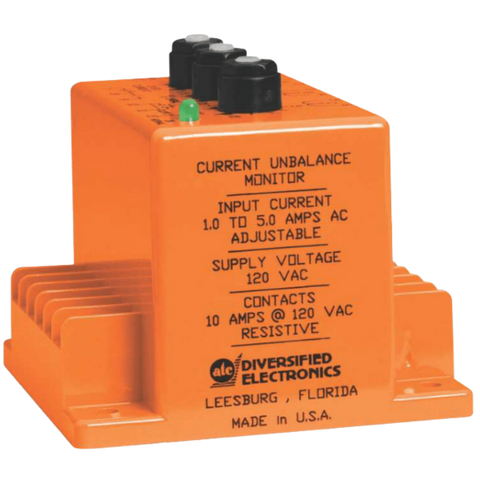
Voltage imbalance is a good example. A small voltage difference between phases can create a much larger current imbalance and uneven winding heat. A conventional overload may respond to the resulting thermal burden, but it does not necessarily identify the upstream voltage condition or explain why one phase was being stressed more heavily.
The practical lesson is not that overload protection is ineffective. It is that a trip device and a diagnostic system have different responsibilities.
Three Questions to Ask After Compliance Is Confirmed
What is happening on the supply?
Phase-by-phase voltage, voltage imbalance, phase loss, undervoltage, and intermittent utility events can expose a problem the overload relay was not selected to name.
What is happening to the load?
Pump blockage, cavitation, mechanical drag, or a process change may increase current or power gradually without producing an immediate overload trip.
What changed before the event?
Fault history and operating trends can separate a recurring supply issue from a one-time load problem and give maintenance a more useful starting point.
Give Each Protection Device a Clear Job
Adding advanced monitoring should not blur the code-required functions. A cleaner approach is to define what each part of the system is expected to detect, what action it should take, and what evidence it should retain.
| System responsibility | Primary question | Typical approach |
|---|---|---|
| Required overload protection | Is the motor operating in a condition that creates excessive heating under the applicable code rules? | Overload protection selected and applied in accordance with the adopted NEC and equipment instructions. |
| Incoming supply supervision | Are the phase and voltage conditions acceptable before and during operation? | A phase and voltage monitor selected for the specific faults, thresholds, delays, and control action required. |
| Motor and load monitoring | Is electrical behavior moving away from the motor's expected operating pattern? | Current, voltage, power, and load monitoring with enough detail to support troubleshooting. |
| Condition-based maintenance | Is the motor or driven equipment developing a mechanical or thermal problem? | Electrical trends combined with configured temperature, vibration, alarm, and operating history. |
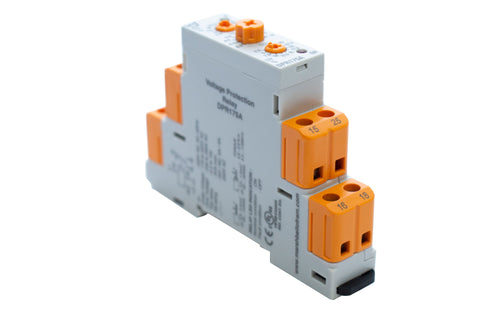
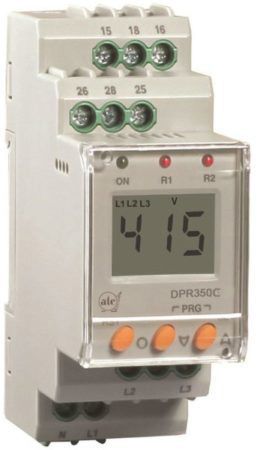
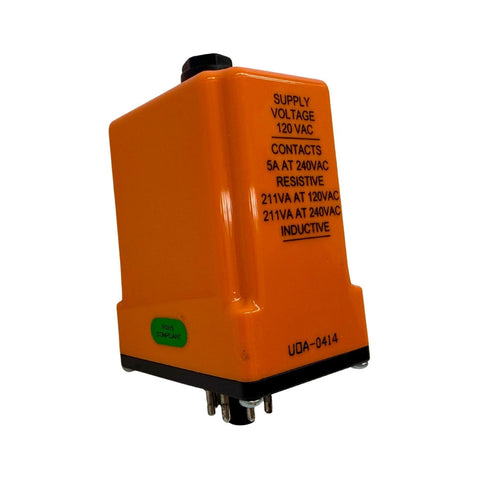
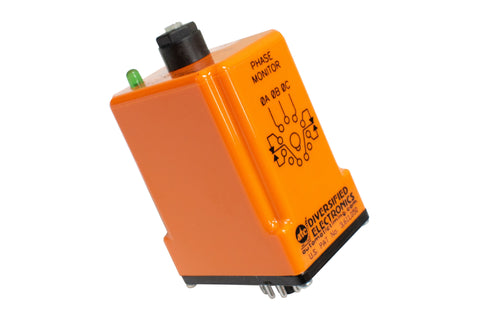
A phase monitor does not replace the overload device. It adds independent supervision of selected supply conditions. Its relay output can be used to block a start, initiate a trip, or signal the control system according to the engineered design.
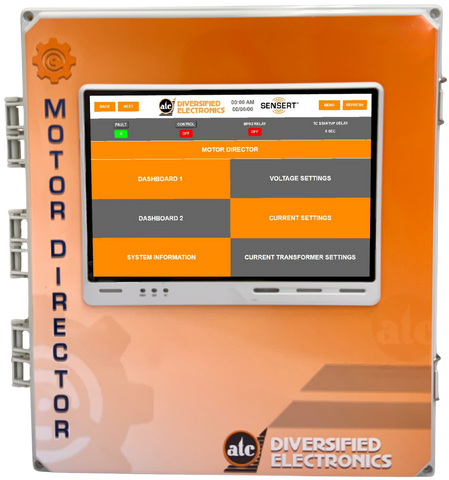
Motor Director™ extends the diagnostic side for critical motors by combining phase-by-phase electrical data with operating history and configured mechanical sensing. The result is not simply more alarms. It is more context for deciding whether maintenance should inspect the power source, motor, process, or rotating equipment.
Motor Director is currently intended for critical motors not using VFDs. It should be applied within a properly engineered, code-compliant motor-control and protection system.
What the Duplex Lift-Station Case Actually Teaches
The white paper documents a lift station that had been replacing pump motors every 12 to 18 months. The reported cause was an approximately 3% utility-side voltage imbalance that produced more than 20% current imbalance at the motor. The installed overload relays did not trip because the condition did not appear as a uniform sustained overload within their operating characteristics.
The important takeaway is not the specific percentage by itself. It is how the facility's maintenance strategy changed once the system could capture the right evidence:
- The source could be identified
- The unsafe condition could be isolated
- The event could be documented for utility coordination
- The replacement cycle could be addressed at its cause instead of at the failed motor
The white paper reports zero motor failures over the following three years. That is one application result, not a universal performance guarantee, but it illustrates the operational difference between meeting the overload requirement and being able to diagnose the condition that is damaging the asset.
What to Capture the Next Time a Motor Trips
A more useful post-trip record goes beyond the fault label. For critical motors, collect:
- Trip time
- Motor load
- Restart behavior
- Phase-by-phase current
- Phase-by-phase voltage
- Recent power, temperature, and vibration trends
Then compare the event with the process state, recent maintenance, utility history, and the motor's normal operating baseline. This turns advanced monitoring into a troubleshooting method instead of a collection of disconnected measurements.
Compliance Is the Foundation, Not the Finish Line
NEC 430.32 remains essential. Advanced monitoring does not replace the overload protection, branch-circuit protection, disconnecting means, controller requirements, or engineering judgment required by the adopted code.
For uptime-critical motors, the next question is whether the installed system can detect the electrical, load, and equipment-condition changes that often precede failure. Dedicated phase monitoring and Motor Director can add that visibility when the selected capabilities match the application.
Always consult the NEC edition adopted in your jurisdiction, the authority having jurisdiction, equipment instructions, and a qualified electrical professional when designing or modifying motor protection.
NEC 430.32 and Advanced Motor Monitoring FAQs
What does NEC 430.32 cover?
NEC 430.32 establishes requirements for motor overload protection. The exact method depends on the motor and installation. It should not be treated as a complete condition-monitoring specification for every electrical or mechanical failure mode.
Does compliance with NEC 430.32 prevent every motor failure?
No. Code-compliant overload protection addresses a required hazard and failure category, but motors can still be damaged by voltage imbalance, phase loss, utility disturbances, abnormal load behavior, bearing deterioration, or other conditions outside a conventional overload device's visibility.
Why can voltage imbalance damage a motor?
A relatively small voltage imbalance can create a much larger current imbalance. The uneven current produces localized winding heat, accelerates insulation aging, and can shorten motor life.
Does a phase monitor replace motor overload protection?
No. A phase monitor adds independent supervision of selected incoming voltage and phase conditions. It complements, rather than replaces, the overload protection required for the motor.
How does Motor Director support predictive maintenance?
Motor Director records electrical, operating, and configured mechanical data over time. Trends, alarms, and fault history give maintenance teams more context for root-cause analysis, inspection planning, and condition-based decisions.
Can Motor Director be used with VFD-driven motors?
Motor Director is currently designed for motors not using VFDs. Consult ATC Diversified Electronics when evaluating a VFD application.