Articles/Case Studies
Beyond Vibration Monitoring: Why Motor Reliability Needs Electrical, Thermal, and Mechanical Data
Vibration monitoring has long been one of the most trusted tools in industrial predictive maintenance. It helps maintenance and reliability teams identify mechanical issues such as bearing wear, shaft misalignment, imbalance, looseness, resonance, and other rotating equipment concerns before they become larger problems.
But for many industrial motors, vibration is not where the failure begins.
A motor can experience electrical imbalance, current overload, phase loss, poor power quality, abnormal loading, or thermal stress long before a vibration alarm ever appears. By the time vibration becomes the obvious symptom, the motor may already be moving through a failure path that started somewhere else.
That is why modern motor reliability strategies are shifting from vibration-only monitoring toward integrated motor monitoring. Instead of looking at mechanical symptoms in isolation, integrated monitoring connects electrical, thermal, mechanical, and operating data to help teams understand what is happening, why it is happening, and what should be done next.
For facilities that rely on motors to drive pumps, compressors, conveyors, fans, mixers, HVAC systems, and production equipment, that difference matters. Predictive maintenance is not just about detecting a problem earlier. It is about making better decisions with better context.
Is Vibration Monitoring Enough for Predictive Maintenance?
Vibration monitoring is still extremely valuable. In many cases, it is one of the best methods for identifying mechanical degradation inside rotating equipment. It can help detect bearing defects, imbalance, misalignment, looseness, resonance, and other mechanical conditions that may lead to downtime.
However, vibration data does not always explain the full failure story.
A vibration alarm may tell a maintenance team that something has changed mechanically, but it may not reveal whether that change was caused by a true mechanical defect, an electrical imbalance, an overload condition, a power quality issue, or a process-related load change.
That creates a common problem for maintenance teams: they may fix the visible symptom without correcting the underlying cause.
For example, a motor may be removed, repaired, realigned, and returned to service. But if that motor goes back into an environment with voltage imbalance, current imbalance, poor load conditions, or thermal stress, the same failure pattern may eventually return.
This is where integrated motor monitoring becomes more powerful. It helps reliability teams move beyond the question, “Is the motor vibrating?” and toward the more useful question, “What operating condition caused the motor to behave this way?”
Why Motor Failures Often Start Before Vibration Appears
Industrial motors are not just mechanical assets. They are electromechanical systems.
The electrical power feeding the motor, the current drawn by the load, the heat generated inside the motor, and the mechanical response of the rotating system all affect each other. A problem in one area can create symptoms in another.
An electrical issue can become a thermal issue.
A thermal issue can accelerate insulation breakdown.
Insulation breakdown can affect motor performance.
Motor performance issues can create mechanical stress.
Mechanical stress can eventually appear as elevated vibration.
This is why vibration-only monitoring can sometimes detect the result of a failure path rather than the beginning of it.
The white paper "Beyond Vibration Monitoring With Motor Director" explains how an electrical condition, such as voltage imbalance, can progress into current imbalance, localized stator heating, insulation breakdown, magnetic field distortion, torque pulsation, rotor eccentricity, bearing side loading, elevated vibration, and eventually mechanical failure. In that sequence, vibration appears near the end of the chain, not at the beginning.
That does not reduce the value of vibration monitoring. It increases the need to pair vibration data with other motor health indicators.
What Is Integrated Motor Monitoring?
Integrated motor monitoring is the practice of evaluating multiple motor health indicators together instead of relying on one data source alone.
A complete motor monitoring strategy may include:
• Voltage monitoring
• Current monitoring
• Phase loss protection
• Voltage imbalance detection
• Current imbalance detection
• Overload monitoring
• Power factor analysis
• Thermal modeling
• Temperature monitoring
• Vibration monitoring
• Runtime history
• Fault history
• Remote monitoring and trending
The purpose is not simply to collect more data. The purpose is to connect the right data points so maintenance teams can understand the relationship between electrical conditions, thermal behavior, mechanical response, and operating history.
That context helps teams separate temporary process changes from real reliability concerns. It also helps prevent repeat failures by identifying the conditions that may be damaging the motor before mechanical symptoms become severe.
How Integrated Monitoring Improves Root Cause Analysis
One of the biggest advantages of integrated motor monitoring is improved root cause analysis.
A vibration-only system may detect increased vibration and point the team toward a mechanical issue. But if electrical and thermal data are available at the same time, the team can look deeper.
For example, rising vibration may suggest imbalance or misalignment. But if current imbalance and uneven temperature patterns are also present, the problem may be connected to electrical stress, uneven loading, or internal motor conditions.
That distinction changes the maintenance response.
Instead of replacing a bearing and hoping the issue is solved, the team can investigate whether the motor is being affected by supply conditions, load behavior, thermal stress, or another operating factor.
This is where ATC Diversified Electronics brings a strong point of view to industrial motor reliability. ATC/DEI’s background is not limited to mechanical monitoring. The company’s experience in phase monitoring, current monitoring, motor protection, power quality awareness, and connected motor intelligence supports a broader reliability philosophy: many failures need to be understood across the full electrical, thermal, and mechanical system.
Why Electrical Data Matters in Predictive Maintenance
Electrical data can reveal early signs of motor stress before physical damage becomes obvious.
Voltage imbalance, current imbalance, phase loss, overload, undervoltage, overvoltage, and abnormal power factor can all indicate that a motor is operating under unfavorable conditions. If these conditions go unnoticed, they can generate heat, reduce efficiency, damage insulation, and increase mechanical strain over time.
This matters because many facilities already have strong mechanical maintenance practices, but they may not have the same visibility into the electrical conditions that affect motor life.
When electrical monitoring is connected to vibration and temperature data, reliability teams gain a clearer understanding of whether the motor is failing because of a mechanical defect or because the operating environment is creating mechanical stress.
That type of visibility supports better maintenance planning, more accurate troubleshooting, and stronger long-term asset protection.
Why Thermal Monitoring Matters in Motor Reliability
Heat is often one of the clearest indicators that a motor is under stress.
Thermal stress can come from overload conditions, poor ventilation, high ambient temperatures, voltage imbalance, current imbalance, insulation degradation, or abnormal operating conditions. When heat is not properly identified and addressed, it can shorten motor life and accelerate failure.
Thermal monitoring gives maintenance teams another layer of context. It helps show how the motor is responding to electrical and mechanical conditions over time.
When temperature data is correlated with vibration, current, voltage, runtime, and fault history, teams can better understand whether a motor is experiencing a short-term operating change or a developing reliability issue.
Integrated Monitoring Helps Reduce False Alarms
One of the challenges with single-parameter monitoring is that it can sometimes create alarms without enough context.
A temporary process change, load transition, startup condition, or short-term resonance event may trigger a vibration alarm. Without supporting data, it can be difficult to know whether the alarm represents a true developing fault or a brief operating condition.
Integrated monitoring helps reduce that uncertainty.
When vibration data is reviewed alongside voltage, current, power factor, temperature, thermal capacity, runtime, and historical trends, maintenance teams can make a more informed decision. They can determine whether the condition is isolated, recurring, load-related, electrical, thermal, or mechanical.
That improves diagnostic confidence and helps maintenance teams focus attention where it matters most.
How ATC Diversified Electronics Supports Integrated Motor Reliability
ATC Diversified Electronics supports motor reliability through a layered ecosystem of motor protection, monitoring, diagnostics, and connected intelligence.
At the foundational level, ATC/DEI phase monitors help protect motors from damaging electrical conditions such as phase loss, phase reversal, voltage imbalance, undervoltage, overvoltage, under-frequency, and over-frequency.
Current monitors add process-level awareness by helping identify conditions such as dry-run operation, conveyor jams, overload, underload, and stalled loads.
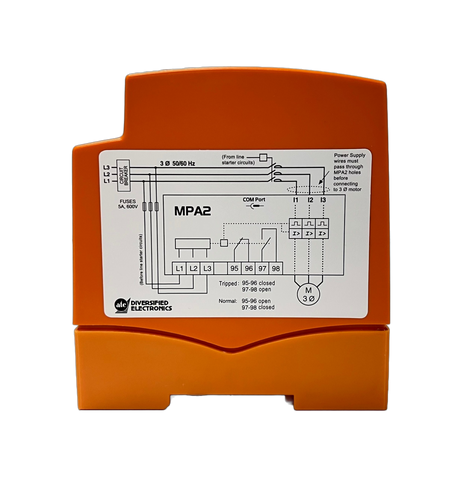
The MPA2 Motor Protection Analyzer builds on this approach with advanced electrical diagnostics, including current monitoring, voltage monitoring, power factor analysis, real power, reactive power, energy usage, thermal modeling, and historical trending.
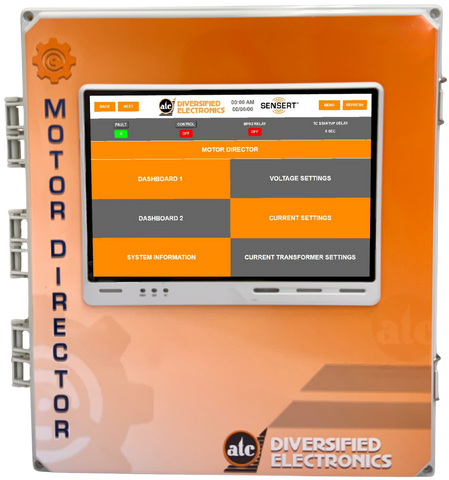
Motor Director™ represents a more complete implementation of this integrated reliability strategy. It combines motor protection, electrical analytics, thermal modeling, wireless vibration monitoring, wireless temperature monitoring, local touchscreen HMI access, cloud connectivity, historical trending, SCADA/API integration, and predictive maintenance analytics into one connected motor monitoring platform.
This gives ATC/DEI a strong position in the predictive maintenance conversation. The company is not approaching motor reliability from vibration alone. It connects the protection layer, diagnostic layer, and monitoring layer to help facilities better understand the complete motor failure path.
Integrated Monitoring vs. Vibration-Only Monitoring
Vibration-only monitoring is still highly effective for mechanical diagnostics, especially for bearing analysis, shaft dynamics, imbalance, misalignment, and high-speed rotating equipment applications.
The issue is not that vibration monitoring is outdated. The issue is that many industrial motor failures require more context than vibration alone can provide.
Integrated motor monitoring expands the view by adding electrical and thermal insight to the mechanical data. That means a reliability team can evaluate not only the vibration response, but also the voltage, current, power factor, thermal condition, runtime, and fault history surrounding the event.
In simple terms:
| Question | Vibration-Only Monitoring | Integrated Motor Monitoring |
|---|---|---|
| Is there a mechanical symptom? | Yes | Yes |
| Is the motor experiencing voltage imbalance? | No | Yes |
| Is the motor experiencing current imbalance? | No | Yes |
| Is thermal stress developing? | Limited | Yes |
| Is the issue tied to load behavior? | Limited | Yes |
| Can the data support root cause analysis? | Sometimes | More effectively |
| Can monitoring connect protection and prediction? | Usually external | Yes |
This is the value of integrated monitoring. It does not replace vibration analysis. It strengthens it.
When Should Facilities Move Beyond Vibration-Only Monitoring?
Facilities should consider a more integrated motor-monitoring strategy when dealing with critical motor-driven equipment, recurring failures, unexplained vibration alarms, or limited visibility into operating conditions.
Integrated monitoring may be especially useful when:
• Motors are critical to production or process stability
• Failures create expensive downtime
• Repaired motors experience repeated issues
• Vibration alarms do not clearly explain the cause
• Electrical events or overloads contribute to downtime
• Motors operate under changing loads
• Equipment is remote or difficult to inspect manually
• Maintenance teams need historical trends
• Facilities need local HMI, cloud access, SCADA, or API integration
The stronger the asset’s impact on production, safety, energy efficiency, or maintenance costs, the more important it becomes to understand the full operating picture.
Build a More Complete Motor Reliability Strategy
Predictive maintenance should not stop at detecting that a motor is vibrating. It should help maintenance teams understand why the motor is under stress, what conditions contributed to the issue, and how to prevent the failure from repeating.
Vibration monitoring remains an important part of that strategy, but it becomes more powerful when paired with electrical, thermal, and operating data.
ATC Diversified Electronics helps industrial teams move toward a more complete view of motor health. From phase and current monitoring to the MPA2 Motor Protection Analyzer and Motor Director, ATC/DEI solutions are designed to connect protection, diagnostics, monitoring, and actionable reliability insight.
For facilities looking to reduce downtime, improve root cause analysis, and strengthen predictive maintenance programs, the next step is not simply more data.
It is better-connected data.
Contact ATC Diversified Electronics to discuss how integrated electrical, thermal, and mechanical monitoring can support your motor reliability strategy.
Common Questions About Integrated Motor Monitoring and Predictive Maintenance
Is vibration monitoring enough for predictive maintenance?
Vibration monitoring is valuable for identifying mechanical issues such as bearing wear, misalignment, imbalance, looseness, and resonance. However, it does not always reveal whether the root cause began with electrical imbalance, overload, thermal stress, poor power quality, or changing load conditions.
What is integrated motor monitoring?
Integrated motor monitoring is the practice of evaluating multiple motor health indicators together, including voltage, current, phase conditions, power factor, thermal behavior, temperature, vibration, runtime, fault history, and operating trends. This helps maintenance teams understand how electrical, thermal, mechanical, and process conditions are connected.
Why do motor failures often start before vibration appears?
Motors are electromechanical systems, so an issue may begin with voltage imbalance, current imbalance, overload, phase loss, or thermal stress before it becomes a mechanical vibration problem. By the time vibration becomes obvious, the motor may already be farther along the failure path.
How does integrated monitoring improve root cause analysis?
Integrated monitoring improves root cause analysis by giving maintenance teams more context around an alarm or failure. Instead of only seeing that vibration increased, teams can also review voltage, current, temperature, load behavior, power factor, runtime, and fault history to better understand what caused the condition.
Why does electrical data matter in motor reliability?
Electrical data matters because voltage imbalance, current imbalance, phase loss, undervoltage, overvoltage, overload, and abnormal power factor can stress a motor before physical damage is obvious. When electrical data is reviewed alongside vibration and temperature, teams can make better maintenance decisions.
Why does thermal monitoring matter for industrial motors?
Thermal monitoring matters because heat is a strong indicator of motor stress. Overload conditions, poor ventilation, voltage imbalance, current imbalance, high ambient temperature, and insulation degradation can all create heat that shortens motor life if left uncorrected.
How does integrated monitoring help reduce false alarms?
Integrated monitoring helps reduce false alarms by adding context to single-parameter events. A vibration alarm may be caused by a temporary load change, startup condition, resonance event, or true mechanical fault. Reviewing supporting electrical, thermal, and operating data helps determine whether the condition needs immediate action.
How does Motor Director support integrated motor reliability?
Motor Director supports integrated motor reliability by combining motor protection, electrical analytics, thermal modeling, wireless vibration monitoring, wireless temperature monitoring, local touchscreen HMI access, cloud connectivity, historical trending, SCADA/API integration, and predictive maintenance analytics into one connected platform.
When should a facility move beyond vibration-only monitoring?
A facility should consider moving beyond vibration-only monitoring when motors are critical to production, failures are expensive, vibration alarms do not clearly explain the cause, electrical events contribute to downtime, motors operate under changing loads, or maintenance teams need remote access and historical trends.