Articles/Case Studies
Motor Director for EASA Shops: Remote Motor Monitoring That Helps Reduce Repeat Failures
A motor can leave your shop repaired, tested, and ready for service, then fail again because of conditions your team never had the chance to see.
For EASA shops, motor repair facilities, and rewind operations, this creates one of the most difficult challenges in the service relationship. Your team correctly repaired the motor, but once the motor is back in the field, power quality, loading conditions, phase issues, temperature, vibration, duty cycle, and customer operation all begin influencing what happens next.
When a repaired motor fails again, the end user may first question whether the repair held up. Motor Director™ gives EASA shops a stronger way to respond by connecting repair expertise with real operating data from the field.
Instead of relying only on repair records or post-failure inspection, your team can review the conditions the motor experienced after installation and use that data to support clearer, more confident customer conversations.
Why Repeat Motor Failures Require More Than a Repair Record
EASA shops already understand motors. You know how to inspect windings, evaluate bearings, test insulation, identify overload damage, and return a motor to proper operating condition.
The challenge is that many repeat motor failures are not caused by the repair itself. They are caused by the environment the motor returns to.
A repaired motor may go back into an application with voltage imbalance, phase loss risk, current imbalance, overloading, poor power quality, excessive cycling, rising vibration, or temperature conditions that were not visible during the repair process. Without field data, your shop may only see the result after the damage is done.
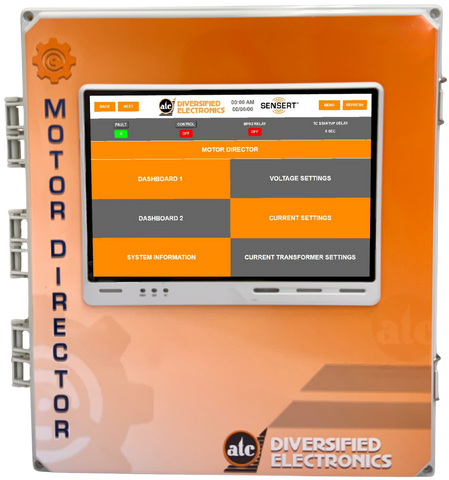
Motor Director helps close that information gap by monitoring the motor after installation. The system is designed to detect and isolate the motor from adverse conditions such as phase loss, overvoltage, undervoltage, current imbalance, voltage imbalance, and overcurrent events. It also provides visibility into operating trends, loading compared to nameplate ratings, real-time voltage conditions, event history, temperature data, and 3-axis vibration analytics aligned with ISO 10816-3:2009.
For your shop, that means the repair record is no longer the only evidence available. You can connect what was repaired with what happened after the motor returned to service.
Remote Motor Monitoring Helps Your Expertise Travel With the Motor
The most important work your shop does may happen inside the repair facility, but the motor’s real operating story continues after it is reinstalled.
Remote motor monitoring gives your team a way to stay connected to that story.
With Motor Director, your shop can review operating conditions between service intervals, monitor electrical and mechanical performance, identify developing issues earlier, and use documented data to support recommendations after the repair.
That matters because customers are not only looking for a repaired motor. They are looking for fewer unplanned failures, less downtime, better reliability, and a clearer explanation when problems repeat. Motor Director helps your shop provide that explanation with data.
Instead of saying, “This may have been caused by field conditions,” your team can point to actual operating conditions such as voltage imbalance, current imbalance, overcurrent events, or mechanical trends that developed after installation.
That turns your repair expertise into a more complete reliability conversation.
How Motor Director Supports EASA Shops After the Motor Leaves
For EASA shops, the value of Motor Director is not limited to fault detection. The bigger value is what the data allows your shop to do.
Motor Director helps your team support customers in several important ways:
• Support warranty discussions with operating data
• Stay engaged with customers between repair events
• Recommend corrective action based on field conditions
• Identify whether motors are operating beyond expected limits
• Monitor temperature and vibration trends before failure occurs
• Document electrical events that may contribute to repeat damage
This is especially important for customers with critical motors in applications such as pumps, compressors, fans, blowers, conveyors, municipal systems, and industrial production equipment. In those environments, a repeat failure is not just a maintenance issue. It can affect uptime, production schedules, service costs, and customer confidence.
By using Motor Director, your shop can help customers move from reactive repair to condition-based motor support.
Better Data Creates Better Customer Conversations
Repeat failures can strain even strong customer relationships.
The customer may believe the motor failed because of the repair. Your team may believe the application caused the failure. Without operating data, both sides may be working from incomplete information.
Motor Director helps shift the conversation away from blame and toward root cause.
When your shop has access to field data, you can show what the motor experienced after it was returned to service. You can explain whether the motor was exposed to poor voltage conditions, phase issues, abnormal loading, vibration changes, or other operating stress.
That changes the customer conversation from:
“Why did the repair fail?”
to:
“Here is what the motor experienced in the field, and here is what we recommend next.”
For EASA shops, that is a stronger and more professional position. It protects your credibility, helps the customer understand the real issue, and creates a clearer path toward preventing the next failure.
ATC Diversified Electronics Brings Motor Protection Expertise Into the Field
ATC Diversified Electronics has long focused on motor protection, monitoring, and control solutions that help identify harmful operating conditions before they become larger equipment problems.
Motor Director builds on that expertise by combining electrical monitoring, mechanical condition insight, remote visibility, and data logging into a practical system for motor-driven equipment. For EASA shops, that means you are not simply adding another device to the customer’s site. You are adding a monitoring solution built around the conditions that actually damage motors.
That distinction matters.
A motor repair shop already understands the physical evidence of failure. ATC Diversified Electronics provides the monitoring and diagnostic visibility to help connect that failure evidence to real-world operating conditions.
Together, that gives the customer a more complete picture of motor reliability.
A Practical Option Alongside VFD Discussions
Some shops already provide or recommend VFD-based solutions when customers need speed control, soft starting, or more advanced process control. VFDs are useful in the right applications, but they are not always the first or simplest answer to a repeat motor failure problem.
In many cases, the customer first needs visibility.
They need to know whether the motor is seeing voltage imbalance, phase loss, current imbalance, overcurrent conditions, excessive vibration, temperature changes, or load conditions outside the motor’s intended range.
Motor Director may be a practical fit in those situations because it can integrate into the existing motor starter control panel without requiring a new starter panel built around an embedded VFD.
For your shop, that creates another option when a customer needs more insight and protection, but does not necessarily need a full drive-based upgrade.
Turn Motor Repair Into Long-Term Motor Reliability Support
The strongest EASA shops are not just repair providers. They are trusted motor experts.
Motor Director helps your shop carry that expertise beyond the repair bench and into the customer’s facility. With remote motor monitoring, electrical condition data, temperature, and vibration insight, and documented event history, your team can help customers understand what is happening to their motors after installation.
That creates value in several ways.
It helps reduce uncertainty around repeat failures. It gives customers clearer maintenance direction. It helps your shop support recommendations with data. It can also create a path for recurring service value through ongoing monitoring and performance reviews.
For EASA shops looking to stand apart from repair-only competitors, this is where Motor Director fits. It helps your shop provide more than a repaired motor. It helps you provide the insight customers need to keep that motor running.
The Bottom Line for EASA Shops
Motor Director™ helps EASA shops monitor repaired motors after installation, identify harmful field conditions, support root cause analysis, and provide stronger customer recommendations with real operating data.
If your shop is looking for a practical way to reduce repeat failure uncertainty, support warranty conversations, and expand your value beyond repair and rewind work, Motor Director gives you a direct path into long-term motor reliability support.
Common Questions About Motor Director for EASA Shops
Why do repaired motors sometimes fail again after leaving an EASA shop?
Repaired motors can fail again because of field conditions that occur after the motor is reinstalled. Voltage imbalance, phase loss, current imbalance, overloading, poor power quality, excessive cycling, rising vibration, and temperature changes can all contribute to repeat motor damage even when the original repair was completed correctly.
How does Motor Director help EASA shops after a motor leaves the repair facility?
Motor Director helps EASA shops monitor repaired motors after installation by providing visibility into real operating conditions. This allows the shop to review electrical events, loading, temperature, vibration, and operating trends instead of relying only on repair records or post-failure inspection.
How can remote motor monitoring support repeat failure investigations?
Remote motor monitoring supports repeat failure investigations by showing what the motor experienced in the field before the failure occurred. Instead of guessing whether the issue was caused by the repair, the application, or the power supply, EASA shops can use operating data to support a more accurate root cause conversation.
Can Motor Director help with warranty discussions?
Yes. Motor Director can help support warranty discussions by documenting field conditions such as voltage imbalance, current imbalance, overcurrent events, phase issues, temperature changes, vibration trends, and loading behavior. This gives the shop and customer clearer evidence when reviewing repeat motor failures.
What conditions can Motor Director help identify?
Motor Director can help identify harmful operating conditions such as phase loss, overvoltage, undervoltage, voltage imbalance, current imbalance, overcurrent events, abnormal loading, temperature changes, and vibration trends that may contribute to motor damage over time.
How does Motor Director help EASA shops strengthen customer relationships?
Motor Director helps EASA shops shift customer conversations from blame to root cause. With documented operating data, the shop can explain what the motor experienced after installation and recommend corrective action based on actual field conditions.
Is Motor Director a replacement for a VFD?
No. Motor Director is not a direct replacement for a VFD when the application requires speed control, soft starting, or process control. However, it may be a practical option when the customer needs visibility into motor conditions, electrical issues, vibration, temperature, and load behavior without building a new starter panel around an embedded VFD.
How can EASA shops use Motor Director to expand beyond repair work?
EASA shops can use Motor Director to offer long-term motor reliability support after the repair is complete. By reviewing motor data, monitoring trends, and helping customers understand field conditions, shops can provide ongoing value beyond rewind, repair, and testing services.
What types of customers can benefit from Motor Director monitoring?
Customers with critical motors in pumps, compressors, fans, blowers, conveyors, municipal systems, and industrial production equipment can benefit from Motor Director monitoring. These applications often face high downtime costs, making early visibility into harmful operating conditions especially valuable.