Articles/Case Studies
How Motor Director Helps Detect Stator Coil Failure Before Downtime Starts
Electric motor failures rarely happen without warning. In many cases, a developing stator coil failure begins with subtle changes in magnetic balance, vibration frequency behavior, insulation condition, and localized heat generation before the motor reaches a traditional trip point.
That is why maintenance teams are looking beyond basic overload protection and one-time inspections. They need better visibility into what is happening inside the motor while it is still running.
The white paper, “Correlating Vibration Peak Analysis and Thermal Imaging for Early Detection of Stator Coil Failure” examines how vibration peak analysis and thermal imaging can work together to identify early signs of stator winding failure. The case reviewed in the paper involved an across-the-line motor with abnormal vibration peaks near 119 Hz and 238 Hz, followed by thermal imaging that identified localized heating near the C-phase stator winding region.
What Is Stator Coil Failure?
Stator coil failure occurs when the insulation, winding material, or electrical integrity of a motor’s stator begins to break down. As the condition progresses, it can lead to inter-turn shorts, phase-to-phase faults, insulation failure, rotor damage, bearing stress, and eventually catastrophic motor failure.
The challenge is that early stator winding problems are not always obvious.
A motor may continue to run smoothly. Overall vibration values may remain low. Traditional overload relays, fuses, and breakers may not trip because the fault has not reached a defined threshold yet. By the time the issue becomes obvious, the motor may already require an emergency repair, rewind, or replacement.
Why Traditional Motor Protection May Not Catch Early Stator Winding Problems
Traditional motor protection devices are essential for safe operation, but they are often designed to respond after a fault condition reaches a specific limit. They are not always designed to identify subtle warning signs that develop before a severe fault occurs.
Early-stage stator winding degradation can create:
• Uneven magnetic forces
• Harmonic vibration activity
• Localized heat near a phase winding
• Changes in frequency-domain behavior
• Abnormal electrical vibration frequencies
• Temperature differences across the motor body
These early indicators may not trigger a standard protective device. That is where Motor Director, vibration peak analysis, and thermal imaging correlation become valuable.
What Is Vibration Peak Analysis?
Vibration peak analysis looks at where vibration energy is occurring across specific frequencies. Instead of only measuring how much vibration exists, it helps identify the type and source of vibration.
This matters because not all vibration points to the same problem.
Mechanical issues may show patterns related to imbalance, looseness, misalignment, or bearing wear. Electrical issues may show patterns tied to line frequency, twice-line-frequency vibration, harmonics, magnetic imbalance, or stator-related excitation.
In the white paper case, the motor showed very low overall displacement values and stable mechanical operation. However, frequency-based vibration analysis identified abnormal activity near 119 Hz, 238 Hz, and higher-frequency content between 714 and 1310 Hz.
That frequency information provided an early indication that the motor was developing more than a simple mechanical issue.
Why 119 Hz and 238 Hz Matter in Motor Vibration Analysis
On a 60 Hz motor, twice-line-frequency vibration occurs near 120 Hz.
Because the motor in the case was running across the line and was not connected to a variable frequency drive, the abnormal frequencies could not be dismissed as VFD switching harmonics. That made the frequency data more meaningful.
The vibration peak near 119 Hz suggested electrical-frequency-related activity. The additional harmonic activity near 238 Hz further supported the possibility of electrical excitation within the motor. As stator winding degradation progresses, uneven magnetic forces can create vibration components tied to line-frequency-related harmonics.
In simple terms, the vibration data helped show that the motor was beginning to behave abnormally before the failure became obvious through severe mechanical symptoms.
What Thermal Imaging Adds to Motor Fault Detection
Thermal imaging gives maintenance teams a different view of motor health. While vibration analysis identifies motion and frequency behavior, thermal imaging identifies heat patterns. That distinction is important.
A motor that is generally warm may be experiencing load or cooling-related issues. A motor with a concentrated hot spot near a specific phase winding may be showing signs of localized electrical stress.
In the case reviewed in the white paper, thermal imaging later identified localized hot spots associated with the C-phase stator winding region. The maximum observed temperature approached approximately 140°F on the stator, while nearby areas remained substantially cooler.
That heat pattern helped confirm that the earlier vibration signatures were not random noise or harmless operating characteristics. The thermal image provided a physical location that aligned with the vibration data.
Why Vibration Analysis and Thermal Imaging Work Better Together
Vibration analysis and thermal imaging are both useful on their own, but they become more powerful when correlated.
Vibration analysis can identify abnormal frequency behavior before a visible fault becomes severe. Thermal imaging can help confirm where the physical impact of that fault is occurring.
Together, they help answer three important questions:
Is something abnormal happening?
Vibration peak analysis can reveal frequency patterns that indicate developing electrical or mechanical issues.
Where is the issue likely located?
Thermal imaging can reveal localized heat patterns near a specific winding region, phase area, or motor surface.
How confident should maintenance teams be?
When abnormal vibration frequencies and thermal hot spots point toward the same condition, diagnostic confidence improves.
That combined view allows maintenance teams to make better decisions before a developing stator coil failure becomes an emergency outage.
How Motor Director Supports Early Motor Fault Detection
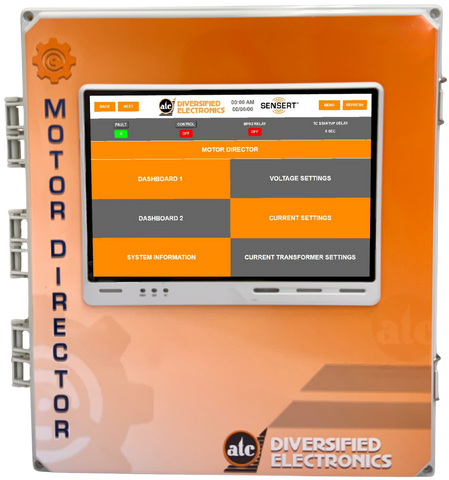
The Motor Director™ Advanced Motor Protection System is designed to provide a more complete view of motor health than traditional protection devices alone.
Motor Director supports continuous monitoring of key motor operating conditions, including vibration behavior, temperature data, and electrical operating conditions. This allows maintenance teams to identify trends over time instead of relying only on isolated inspections or trip events.
In applications where motors run continuously or support critical operations, Motor Director can help teams:
• Support root cause analysis
• Improve maintenance planning
• Reduce the risk of unplanned downtime
• Track changes in motor condition over time
• Strengthen predictive maintenance programs
• Detect abnormal vibration frequency behavior earlier
• Recognize electrical-frequency-related vibration peaks
The white paper also discusses how vibration peak analysis and thermal imaging can be correlated to help identify not only that a motor is developing a problem, but also why that problem may be occurring and where it may be located.
Early Detection Helps Turn Emergency Repairs Into Planned Maintenance
When stator winding degradation is not caught early, the result can be expensive and disruptive. A developing fault can progress into insulation breakdown, phase-to-phase failure, rotor damage, bearing stress, or complete motor failure. At that point, maintenance is no longer planned. It becomes reactive.
By identifying early warning signs through vibration peak analysis, thermal imaging, and continuous monitoring, facilities gain time to investigate the issue, schedule service, reduce downtime risk, and prevent secondary damage.
For maintenance teams, reliability engineers, EASA shops, water and wastewater facilities, industrial plants, and OEMs, that time matters. It can be the difference between a controlled maintenance event and an unexpected motor failure.
Download the Full White Paper
The full white paper, “Correlating Vibration Peak Analysis and Thermal Imaging for Early Detection of Stator Coil Failure” provides a closer look at the vibration data, thermal imaging findings, and diagnostic correlation behind this motor failure case.
Download the white paper to learn how Motor Director, vibration peak analysis, and thermal imaging correlation can help identify developing stator coil problems before they become catastrophic failures.
Common Questions About Motor Director and Stator Coil Failure Detection
How can stator coil failure be detected early?
Stator coil failure can be detected earlier by monitoring abnormal vibration frequency patterns, localized thermal hot spots, electrical imbalance, and changes in motor operating trends. Vibration peak analysis and thermal imaging are especially useful when used together because they connect frequency behavior with physical heat patterns.
How does Motor Director help detect stator coil failure?
Motor Director helps maintenance teams monitor motor operating conditions over time, including vibration behavior, temperature data, and electrical conditions. This continuous visibility can help identify abnormal patterns that may point to developing stator coil failure before a traditional protective device trips.
What does a 120 Hz vibration peak mean on a 60 Hz motor?
On a 60 Hz motor, a vibration peak near 120 Hz may indicate twice-line-frequency vibration. This can be associated with magnetic forces, electrical imbalance, air gap eccentricity, or stator-related issues. In an across-the-line motor without a VFD, this frequency can be an important clue when diagnosing electrical motor faults.
Why use thermal imaging for motor fault detection?
Thermal imaging helps identify heat patterns that may indicate resistance, insulation degradation, load imbalance, or localized electrical stress. A concentrated hot spot near a stator winding region can provide physical evidence that supports vibration or electrical monitoring findings.
Can a motor have low overall vibration and still be failing?
Yes. A motor can show low overall vibration levels while still developing an internal electrical issue. That is why frequency-based vibration analysis is important. It helps identify where vibration energy is occurring and can reveal abnormal electrical-frequency components before overall vibration values become severe.
How does Motor Director help with predictive maintenance?
Motor Director supports predictive maintenance by continuously monitoring motor conditions such as vibration, temperature, and electrical operating behavior. By tracking trends over time, it helps maintenance teams identify developing problems earlier, plan service more effectively, and reduce the risk of unplanned downtime.
Why do vibration analysis and thermal imaging work better together?
Vibration analysis helps identify abnormal frequency behavior, while thermal imaging helps confirm physical heat patterns. When both technologies point toward the same developing issue, maintenance teams can make more confident decisions about motor condition, fault location, and maintenance urgency.