


PRODUCTS
3 Phase Monitor Relays & Voltage Monitors
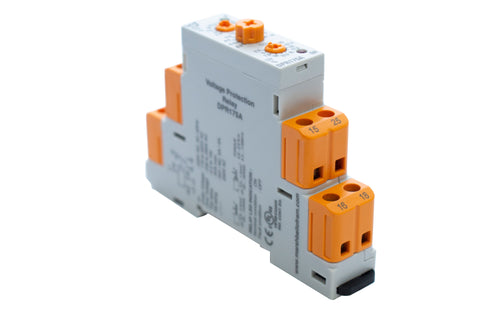
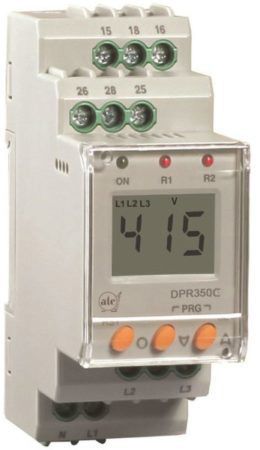
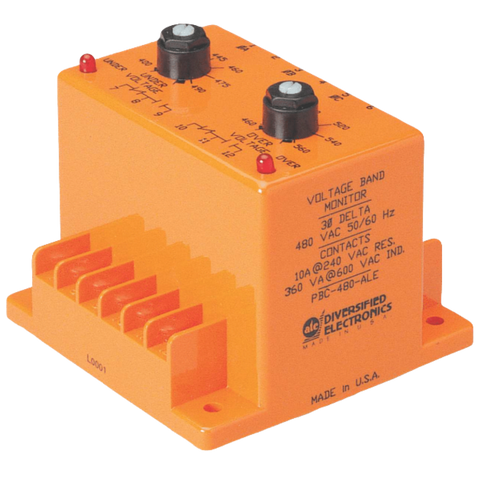
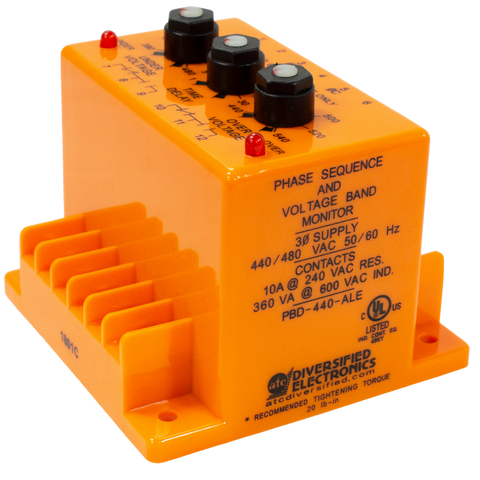
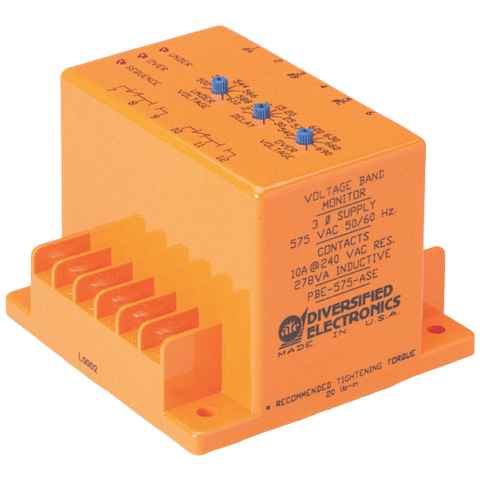
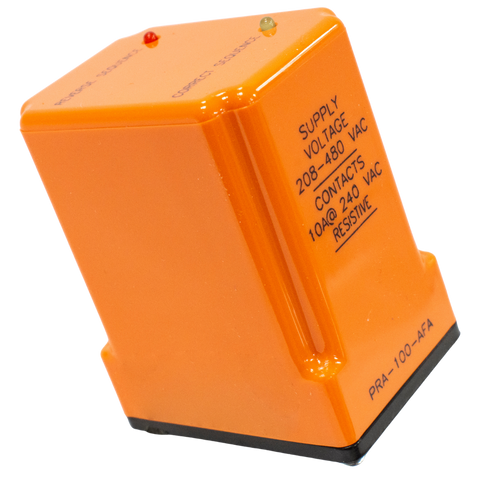
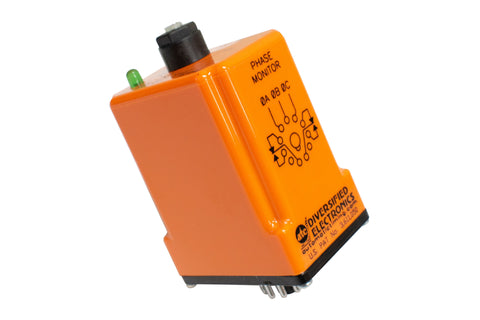
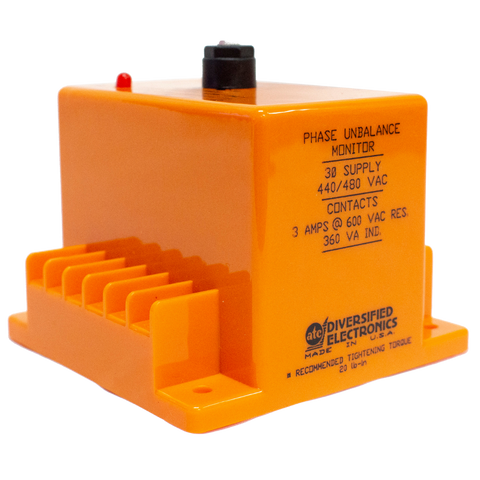
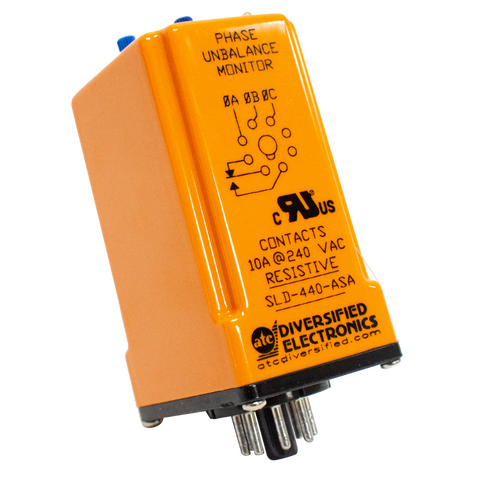

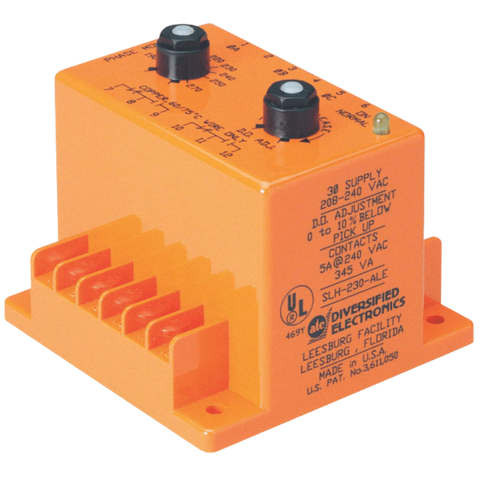
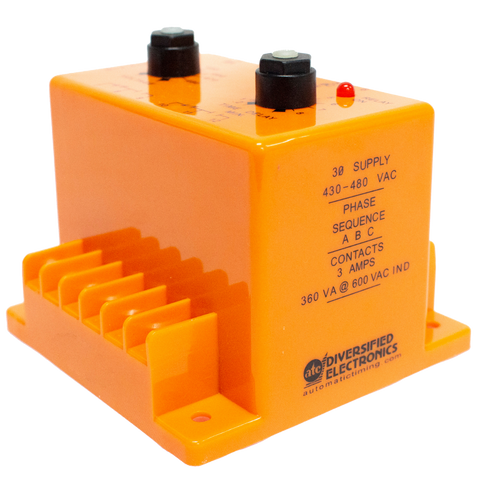
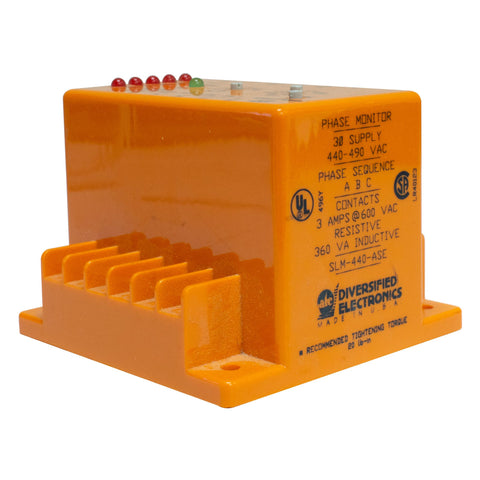
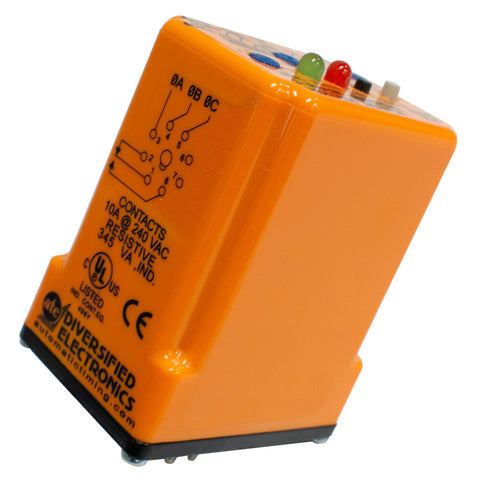
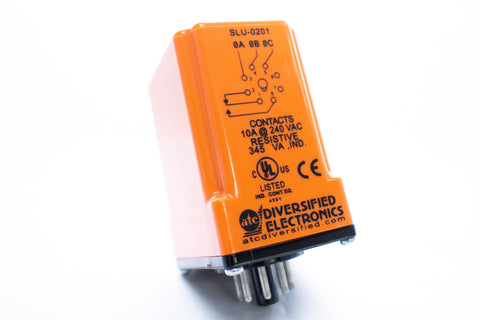
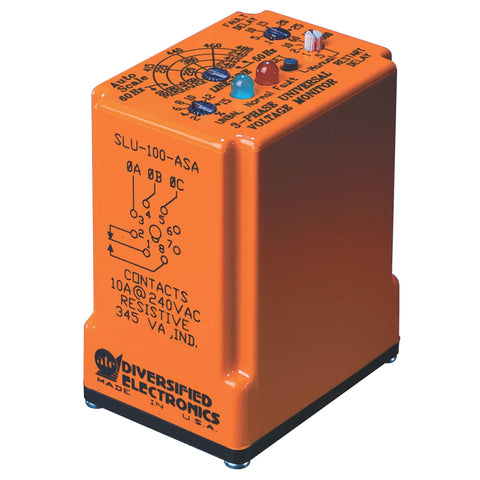
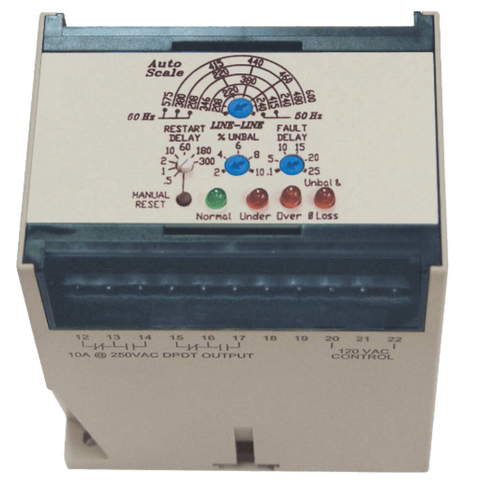
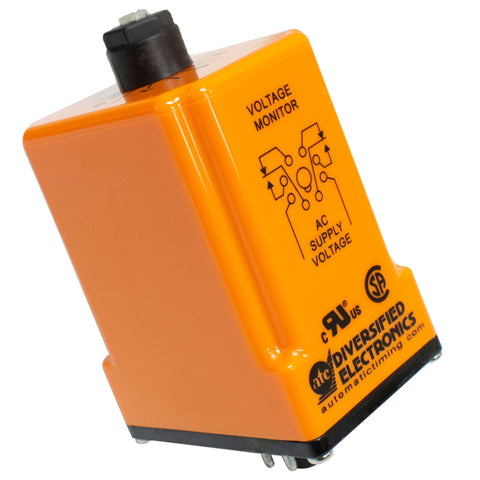
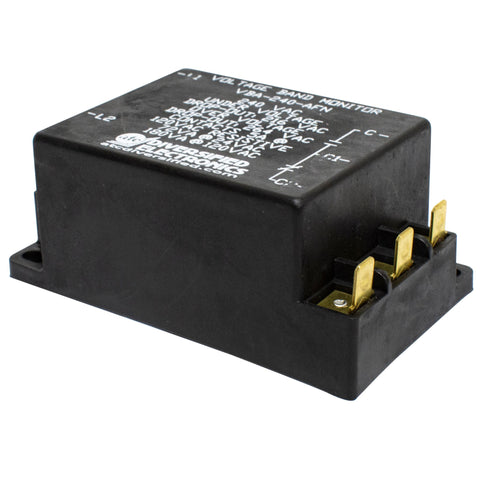
ATC Diversified Electronics offers 3 phase monitor relays and voltage monitors for motors, pumps, HVAC and industrial equipment. Choose basic phase-loss and sequence supervision, adjustable voltage-band protection, or multifunction monitoring with configurable delays, reset modes and diagnostics.
Match the relay to your supply voltage, electrical configuration, faults to detect and required control response. This collection also includes single-phase options, including the UOA and VBA Series.
Compare relay specifications or review the models above.
Compare Three-Phase Monitoring Relays
Use this comparison to narrow the selection by voltage, fault coverage, timing, reset method and control contacts. Each model links to its product page, specification sheet and installation instructions.
Scroll horizontally to view every specification. The model column stays visible. L–L means line-to-line; L–N means line-to-neutral.
| Model / literature | Voltage selection (VAC) | Monitored faults / functions | Delays / response | Reset behavior | Relay outputs | Mounting |
|---|---|---|---|---|---|---|
|
SLA SeriesSLA spec sheet (PDF) SLA instructions (PDF) |
Adjustable ranges: 95–130, 190–270, 350–440 or 430–480; 525–625 with Style E. Fixed-voltage versions also available. | Phase loss, undervoltage and phase reversal. | Fixed response, by style: 0.06–1 s operate; 0.5–2 s release. See timing notes. | Automatic; manual reset optional on Style E with R suffix. | SPDT (Styles A/N); DPDT (Style E). Contact ratings vary by part number. | Plug-in (A/B) or surface mount (E/N), by enclosure. |
|
PBC SeriesPBC spec sheet (PDF) PBC instructions (PDF) |
Delta model voltages: 120, 230, 400, 440, 480 or 575; maximum input 155–700 by model. Wye versions also available. | Undervoltage and overvoltage on each phase. No phase-sequence supervision. | 100 ms operate; fixed 0.5 s release. | Automatic when line conditions return to the acceptable band. | DPDT; 10 A at 240 VAC resistive. | Surface mount; screw terminals. |
|
PBD SeriesPBD spec sheet (PDF) PBD instructions (PDF) |
Model voltages: 120, 230, 400, 440, 480 or 575; maximum input 155–700 by model. Delta or Wye; no neutral required. | Undervoltage and overvoltage on each phase, plus ABC phase-sequence supervision. | 100 ms operate; adjustable 0.1–30 s release. | Automatic when acceptable voltage and phase sequence return. | DPDT; 10 A at 240 VAC resistive. | Surface mount; screw terminals. |
|
DPR-350CDPR-350C spec sheet (PDF) DPR-350C instructions (PDF) |
Operating supply: 280–520 L–L or 160–300 L–N per spec sheet; 45–65 Hz. Self-powered. See voltage note. | Under/overvoltage, under/overfrequency, phase failure, phase sequence and asymmetry. | Power-on: 2–99.9 s; trip: 0–99.9 s; release: 0–99.9 s. Response <200 ms. | Automatic or manual; selectable latching. | Two separate SPDT alarm relays; NO 5 A / NC 3 A at 250 VAC. | 35 mm DIN rail; 35 mm housing width. |
|
SLU-100SLU-100 spec sheet (PDF) SLU-100 instructions (PDF) |
60 Hz: 200–250 or 360–500 L–L. 50 Hz: 200–250 or 330–430 L–L. 550 maximum. | Phase loss/reversal, 2–10% adjustable unbalance, under/overvoltage and under/overfrequency. | Fault: 0.1–25 s; restart: 0.5–300 s in auto mode; severe faults: 100 ms. Power-up: ≥2.5 s. | Automatic or manual mode. | SPDT; 10 A at 240 VAC resistive. | Plug-in ASA or 35 mm DIN rail ASD. |
|
SLU-0200SLU-0200 spec sheet (PDF) SLU-0200 instructions (PDF) |
60 Hz: 200–250 or 360–500 L–L. 50 Hz: 200–250 or 330–430 L–L. 550 maximum. | Phase loss/reversal, 2–10% adjustable unbalance, under/overvoltage and rapid-cycle lockout. Frequency shift is not monitored. | Fault: 1–25 s; restart: 0.5–300 s; severe faults: 1 s. Power-up: ≥2.5 s. | Automatic fault recovery; manual reset after five-cycle lockout. Cycle count resets after 30 min. | SPDT; 10 A at 240 VAC resistive. | 8-pin plug-in, Style A. |
|
SLU-0201SLU-0201 spec sheet (PDF) SLU-0201 instructions (PDF) |
60 Hz: 200–250 or 360–500 L–L. 50 Hz: 200–250 or 330–430 L–L. 550 maximum. | Same monitored faults as SLU-0200, with diagnostic LED fault codes. Frequency shift is not monitored. | Fault: 1–25 s; restart: 0.5–300 s; severe faults: 1 s. Power-up: ≥2.5 s. | Automatic fault recovery; manual reset after five-cycle lockout. Cycle count resets after 30 min. | SPDT; 10 A at 240 VAC resistive. | 8-pin plug-in, Style A. |
|
SLU-600SLU-600 spec sheet (PDF) SLU-600 instructions (PDF) |
60 Hz: 200–250, 360–500 or 550–630 L–L. 50 Hz: 200–250 or 330–430 L–L. 700 maximum. Separate 120 VAC ±10% control supply. | Phase loss/reversal/shift, 2–10% adjustable unbalance, under/overvoltage, under/overfrequency and rapid-cycle lockout. | Fault: 0.1–25 s; restart: 0.5–300 s in auto mode; severe faults: 100 ms. Power-up: ≥2.5 s. | Automatic or manual mode; five-cycle lockout and 30-min cycle-count reset. | DPDT; 10 A at 240 VAC resistive. | 35 mm DIN rail or surface mount. |
DPR-350C voltage note: The linked specification sheet lists a 280–520 VAC L–L operating range, while the instruction manual lists 280–600 VAC L–L with a maximum 300 VAC L–N rating. Both list 160–300 VAC L–N. Confirm the exact wiring and applications above 520 VAC L–L with ATC before selection.
SLU selection: The published literature does not recommend the SLU-100 for generator or variable-frequency-drive applications, or the SLU-0200/0201 for variable-frequency-drive applications. Verify compatibility and installation location for the selected model. The SLU-600 requires a separate 120 VAC control supply.
View voltage-band and timing details
PBC and PBD: The Delta/PBD model numbers 120, 230, 400, 440, 480 and 575 have respective maximum inputs of 155, 275, 485, 550, 570 and 700 VAC L–L. Their adjustable under/over trip limits are 90–120 / 120–150; 185–240 / 208–265; 325–385 / 415–475; 390–480 / 440–540; 400–490 / 460–560; and 500–610 / 540–690 VAC L–L.
PBC Wye versions: 120/208, 220/380 and 277/480 models have maximum L–L inputs of 268, 450 and 565 VAC. Their under/over adjustments are respectively 90–120 / 120–150; 185–220 / 220–255; and 235–277 / 277–320 VAC L–N. A neutral connection is shown in the Wye wiring diagram.
SLA response times: Styles A and E up to 300 VAC operate in 250 ms and release in 0.5 s; above 300 VAC, they operate in 1 s and release in 2 s. Style N operates in 60 ms and releases in 0.5 s. Use the enclosure-specific contact ratings in the ordering table.
SLU reset: The SLU-0200 and SLU-0201 recover automatically from normal faults after the restart delay. Five faults within the cycle-count interval cause lockout requiring the manual RESET button; the cycle count resets after 30 minutes of powered time. See the instructions for the complete reset sequence.
Choose Protection for the Equipment and Supply
For a motor starter, identify whether you need phase-loss and reversal detection, independent upper and lower voltage limits, unbalance supervision, or frequency monitoring. Then select the release delay, restart strategy and relay contacts that fit the control circuit.
- Motors and pumps: Match incoming-power supervision to motor criticality, direction of rotation and the effect of an unexpected stop or restart.
- HVAC and refrigeration: Review phase sequence, voltage limits and restart timing for air handlers, fans and compressors.
- Industrial equipment: Select the appropriate functions for conveyors, machine tools, process equipment and control panels, including the required mounting and alarm outputs.
Water and Wastewater Applications
Lift stations, treatment plants, booster stations and irrigation systems depend on pumps, blowers and grinders. Supply faults can interrupt collection, treatment or distribution. Select monitoring functions and restart behavior according to the operational consequence of losing each asset.
SLA provides basic phase-loss, undervoltage and reversal supervision. PBC provides voltage-band monitoring; PBD adds phase-sequence supervision. DPR-350C and selected SLU models offer broader fault coverage, configurable timing and reset options as shown above.
Connect the Relay to the Required Control Response
A monitoring relay provides a control signal. Its contacts can interface with a starter, contactor, PLC or alarm circuit according to the system design. It complements motor overload and other required protection. Confirm supply configuration, contact load, timing and reset behavior for the exact part number.
Phase and Voltage Monitoring FAQs
What does a three-phase monitoring relay do?
It supervises incoming power and changes its output contacts when specified conditions fall outside acceptable limits. Fault coverage depends on the model and may include phase loss, reversal, voltage limits, unbalance or frequency.
Why monitor incoming power at water and wastewater pumps?
Pumps, blowers and grinders can support critical collection, treatment and distribution processes. Supply supervision provides a control response when a monitored electrical condition moves outside the selected limits.
What is a critical motor?
A critical motor is one whose loss would cause a significant operational consequence. The effect on the process helps determine the fault coverage, diagnostics and restart strategy required.
What is phase loss or single phasing?
Phase loss occurs when one phase of a three-phase supply is lost or falls substantially below its expected value. Select a relay suited to the application, including any regenerative voltage produced by a running motor.
What is phase reversal?
Phase reversal means the incoming phases are connected in the opposite sequence. A relay with sequence supervision can keep its output from energizing when the required phase order is incorrect.
Why is phase sequence important for pumps?
Many pumps and rotating loads must turn in a specified direction. Sequence supervision verifies incoming phase order before the control system enables operation.
What is a three-phase voltage-band monitor?
A voltage-band monitor supervises the supply against upper and lower limits. PBC checks each phase for undervoltage and overvoltage and releases its relay when the condition lasts longer than the specified delay.
What is the difference between PBC and PBD?
Both check undervoltage and overvoltage. PBC has a fixed 0.5-second release delay; PBD adds ABC phase-sequence supervision and an adjustable 0.1–30-second release delay. PBC also has dedicated Wye versions with line-to-neutral adjustments.
What does the SLA Series monitor?
SLA monitors phase loss, undervoltage and phase reversal. Voltage ranges, fixed response times, output contacts and mounting depend on the selected enclosure and part number. Manual reset is optional on Style E with the R suffix.
What does the DPR-350C detect?
DPR-350C monitors voltage limits, frequency limits, phase failure, sequence and asymmetry. It has two separate SPDT alarm relays, configurable delays and automatic or manual reset. Review the voltage note above because the linked specification sheet and manual publish different upper line-to-line operating limits.
What is voltage unbalance?
Voltage unbalance is a difference between the phase voltages in a three-phase system. Selected relays supervise this condition against a configured threshold. The SLU models compared above offer a 2–10% adjustable unbalance setting.
Can a monitoring relay delay restart after a fault?
Yes, on selected models. SLU-100, SLU-0200, SLU-0201 and SLU-600 offer an adjustable 0.5–300-second restart delay in automatic operation. Reset mode and rapid-cycle lockout behavior differ by model.
Can these relays be used on Delta and Wye systems?
Selected models support both configurations. PBD, SLA and the SLU models have published Delta/Wye applications without a neutral connection. PBC has dedicated Delta and Wye versions, and its Wye wiring uses neutral. Check the exact model diagram.
Does a monitoring relay replace a motor overload relay?
No. Supply supervision and motor overload protection perform different functions. Use them as complementary parts of the protection and control system.
How do I choose the right relay for a motor or pump?
Start with the supply voltage, frequency and Delta/Wye or three-wire/four-wire configuration. Identify the required faults, thresholds, release and restart delays, reset method, relay contacts and mounting. Then check the product literature and the effect of a stop or restart on the process.